Featured Professional Workwear & Corporate Apparel Solutions
Custom engineered for high-durability, industrial safety standards, and customized corporate identity across Germany's industrial sectors.
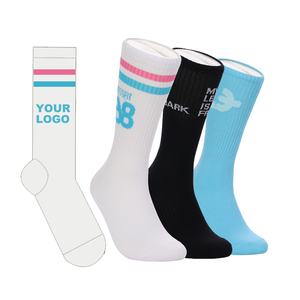
Heavy-Duty Industrial Workwear Cotton White Crew Socks

Precision Custom Embroidered Corporate Tube Socks
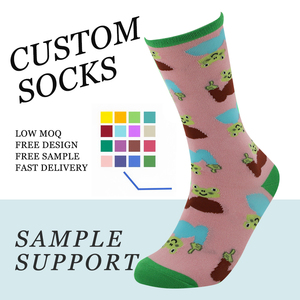
Ergonomic Unisex Jacquard Knitted Corporate Uniform Socks
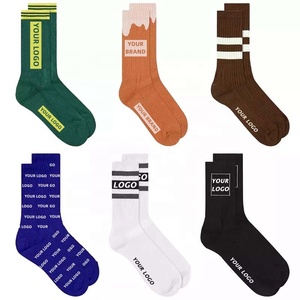
Thick Anti-Bacterial Thermal Workwear Safety Socks
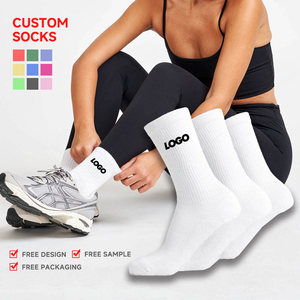
Personalized Corporate Athletic & Gym Crew Workwear Socks
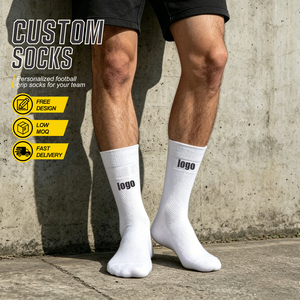
High-Ventilation Performance Active Duty Uniform Socks
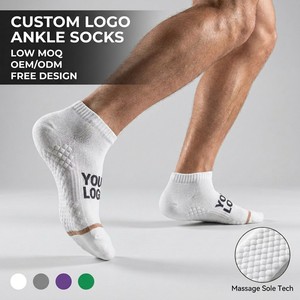
Anti-Blister Tactile Massage Ankle Work Socks
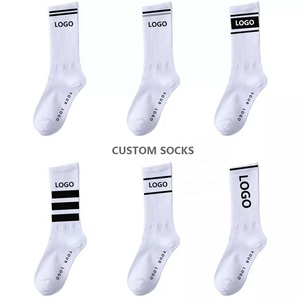
OEM Multi-Sport Athletic & Duty Uniform Socks
Executive Summary: The Evolution of German Corporate Workwear Sourcing
The German workwear and professional uniform ecosystem represents one of the most demanding markets globally. Driven by rigorous regulatory standards such as DIN EN ISO 20471 for high-visibility garments, EN ISO 13688 for general protective clothing requirements, and strict regional DGUV (Deutsche Gesetzliche Unfallversicherung) safety regulations, German corporate procurement directors face a complex set of sourcing criteria. Sourcing workwear for the German market is no longer merely a transaction of off-the-shelf textiles; it has evolved into a strategic alignment with certified engineering standards, ergonomic worker enhancement, and verified environmental stewardship.
Information Gain Insight: Modern German B2B buyers prioritize vendors capable of demonstrating full transparency under the Lieferkettensorgfaltspflichtengesetz (LkSG)—Germany's Supply Chain Due Diligence Act. Factories offering verifiable auditing, OEKO-TEX® Standard 100 Annex 6 certification, and GOTS-certified organic raw materials gain a decisive competitive advantage.
When evaluating the Top 10 Workwear Uniforms Factory & Supplier options in the Germany market, enterprise buyers must balance local distribution efficiency against offshore manufacturing scalabilities. Top-tier global manufacturing partners bridges this gap by offering low Minimum Order Quantities (MOQs starting at 50–100 pieces per style), full cut-and-sew customization, private label branding, and end-to-end logistics under Delivered Duty Paid (DDP) terms directly into German commercial hubs including Frankfurt, Stuttgart, Hamburg, and Munich.
Engineering Workwear Uniforms for German Industry Benchmarks
Industrial uniform manufacturing requires sophisticated textile science. German work environments—ranging from automated heavy-machinery manufacturing (Maschinenbau) to cold-chain logistics—place intense structural demands on apparel. An effective workwear solution must address four critical technical pillars:
1. Tensile Strength & Fiber Blending
Utilizing high-denier Cordura® reinforcement at high-stress wear points (knees, elbows, sock toes) alongside long-staple combed cotton (60/40 or 65/35 poly-cotton matrices) ensures extreme abrasion resistance exceeding 50,000 Martindale rub cycles.
2. Anti-Static & ESD Shielding
For cleanroom operators, semiconductor plants, and automotive electronics assembly lines across Bavaria and Baden-Württemberg, integrating carbon core conductive filaments prevents electrostatic discharge (ESD) adhering to EN 1149-5 standards.
3. Thermal & Moisture Management
Incorporating moisture-channeling synthetic fibers (such as Coolmax® or matrix polyester) alongside silver-ion antimicrobial treatments maintains skin microclimate stability during 12-hour factory shifts, preventing bacterial buildup and dermatological fatigue.
Furthermore, corporate identity (CI) consistency is paramount. German enterprises demand precise color matching according to the RAL Color System and Pantone Matching System (PMS). Our advanced manufacturing floor utilizes computer-controlled dye-bath matching and automated high-density embroidery heads to maintain less than 0.5 Delta-E color variation across multi-year bulk repeat orders.
Localized Workwear Application Scenarios Across German Industrial Hubs
Workwear requirements vary significantly depending on the regional industrial cluster in Germany. A tailored, localized apparel strategy ensures that corporate uniforms perform flawlessly under specific operational stressors:
Automotive & Precision Engineering
Hubs: Wolfsburg, Stuttgart, Munich, Ingolstadt.
Requirements: Scratch-free design (covered zippers and buttons), high stretch mobility for assembly techs, oil/grease repellant finishes, and durable shock-absorbing crew socks.
Logistics, Freight & Port Operations
Hubs: Hamburg, Duisburg, Bremen, Frankfurt Logistics Ring.
Requirements: EN ISO 20471 Class 2/3 High-Visibility orange/yellow garments, weatherproof softshell layering, and high-impact anti-blister footwear accessories for 20k+ daily step counts.
Chemical, Pharma & Cleanroom Facilities
Hubs: Leverkusen, Ludwigshafen, Frankfurt-Höchst.
Requirements: Chemical splash protection (EN 13034), particulate-free cleanroom apparel, lint-free synthetic knits, and anti-microbial thermal base layers.
Craftsmanship & Construction (Handwerk)
Hubs: Nationwide SME & Mittelstand enterprises.
Requirements: Multi-pocket tactical trousers, triple-needle flatlock stitched seams, reinforced work socks, and ergonomic range-of-motion patterning.
Corporate Hospitality & Facility Management
Hubs: Berlin, Düsseldorf, Cologne, Frankfurt.
Requirements: Stain-resistant dress shirts, polished soft-touch polo shirts, custom branded Jacquard dress socks, and quick-dry breathable uniforms.
Green Tech & Renewable Energy Operations
Hubs: North Sea Offshore Wind Hubs, Saxony Solar Valley.
Requirements: Flame-retardant (EN ISO 11612), windproof thermal protective gear, UV-blocking lightweight shirts, and moisture-regulating workwear.
Future Trends: Sustainability, Circular Textiles, and Smart Workwear in Germany
The German commercial landscape is rapidly shifting toward sustainable procurement models. By 2026, over 78% of German mid-market enterprises (Der Mittelstand) report incorporating environmental, social, and governance (ESG) scoring criteria into vendor selection. Workwear uniform manufacturers must adapt to three key macro-trends:
1. Closed-Loop Circular Textile Programs: German companies increasingly demand garment recycling pathways. Forward-thinking factories utilize recycled polyester (rPET from ocean-bound plastics) and pre-consumer recycled cotton. Furthermore, design-for-recycling principles—such as easily removable metallic snaps and mono-material construction—facilitate end-of-life garment shredding and re-spinning.
2. Digital Tech Packs & 3D Virtual Prototyping: To minimize sample waste and accelerate development cycles from 60 days down to 14 days, leading manufacturers deploy CLO3D and Browzwear CAD modeling. German clients receive photorealistic digital renders with exact tension heatmaps, reducing physical sampling rounds to a single sign-off prototype.
3. Micro-Climate Control & Ergonomics: Workwear is evolving from static protection to active physiological support. Anatomically mapped compression zones in socks and garments improve venous return for stationary workers, directly reducing workplace fatigue and sick-day metrics.
Why Global Buyers Partner With Our Manufacturing Infrastructure
Navigating overseas apparel production requires absolute trust, predictable timelines, and transparent quality control. Our integrated manufacturing framework provides German corporate clients with enterprise-grade reliability:
Low MOQ Agility (50–100 Pcs)
Unlike traditional mass factories requiring 3,000+ unit minimums, our agile cell manufacturing structure accommodates short-run specialized teams, corporate rebrands, and pilot testing without penalty pricing.
Full-Package Cut & Sew
From custom pattern drafting, fabric sourcing, digitised Tech Pack creation, screen printing, sublimation, to 3D embroidery, every stage operates under one roof for strict quality oversight.
Rigorous 7-Step Quality Inspection
Every production batch undergoes raw fabric GSM testing, seam pull strength checking, colorfastness wash-testing, dimension tolerance verification, print cure inspection, and barcoded polybag audit.
Direct Germany DDP Logistics
We handle all customs duties, import tariffs, EU REACH declarations, and localized door-to-door freight forwarding. Cartons arrive directly at your German warehouse ready for immediate retail or internal deployment.
Frequently Asked Questions: B2B Workwear Sourcing in Germany
Below are authoritative responses to the most critical technical and logistical questions asked by German procurement managers when selecting a custom workwear factory.
Our production lines strictly adhere to international quality benchmarks, including ISO 9001 and ISO 14001 certification. For specific protective garments, we source fabrics that pass certified lab tests for DIN EN ISO 20471 (High-Visibility), EN 1149-5 (Anti-Static), and EN ISO 11612 (Flame Protection). Lab test reports and material safety data sheets (MSDS) are provided with fit samples upon request.
Our flexible manufacturing floor supports low MOQs starting at 50 to 100 pieces per style for custom knit socks and basic custom apparel. For complex cut-and-sew outerwear or custom-dyed specialized safety fabrics, MOQs typically range from 100 to 300 pieces. This allows German mid-market enterprises (Mittelstand) to launch corporate uniforms without excessive capital lockup.
Yes. We offer complete Delivered Duty Paid (DDP) freight solutions to Germany. All customs paperwork, import duties, VAT processing, and EU REACH chemical safety compliance (ensuring zero harmful AZO dyes, heavy metals, or phthalates) are managed directly by our team. Your shipment arrives at your German distribution node with no hidden fees or regulatory friction.
Digital CAD mockups are finalized within 24 to 48 hours. Physical fit samples with custom embroidery or Jacquard logo knitting require 7 to 12 business days. Following physical sample approval, bulk production runs typically take 20 to 28 business days depending on order volume and decoration complexity. Express air freight to Germany takes 5–7 days, while ocean freight runs approximately 28–35 days.
We provide 360-degree custom branding including custom woven neck labels, soft-touch printed wash tags, rubberized 3D silicone badges, custom Pantone-matched embroidery, high-density screen printing, custom hangtags with GTIN/EAN barcodes, and eco-friendly branded polybags or recyclable shipper boxes ready for immediate distribution.
To provide an exact line-item quote, we request five core specifications: (1) Garment style or reference Tech Pack, (2) Fabric composition & weight (GSM), (3) Target size breakdown ratio, (4) Artwork placement & decoration method (Embroidery, Print, Jacquard), and (5) Estimated quantity per design. Send these details to our team to receive a comprehensive quote within 12 hours.
Accelerate Your Workwear Sourcing Strategy in Germany
Partner with an established OEM/ODM workwear factory engineered for low MOQs, strict European quality compliance, and rapid global fulfillment.