Curated B2B Product Catalog
High-Performance Custom Apparel & Neckwear for Japanese Importers
Explore our premium custom products manufactured to Japanese industrial quality standards (JIS), featuring low MOQs, thermal-cooling technology, high-density cotton, and custom branding.
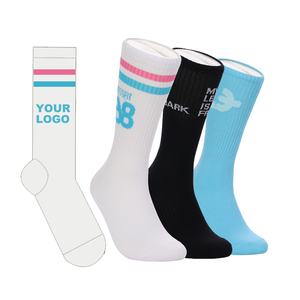
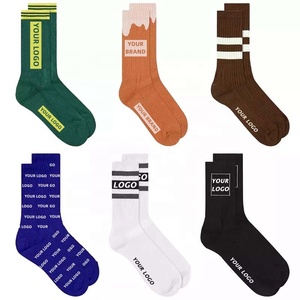
Personalized Embroidered Men's Tube & Crew Fashion Socks
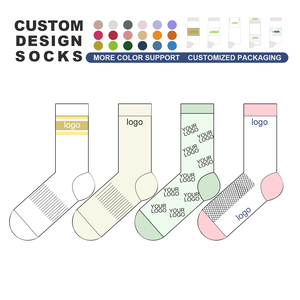
Unisex Jacquard Logo Crew Socks (Custom Knitted Design)
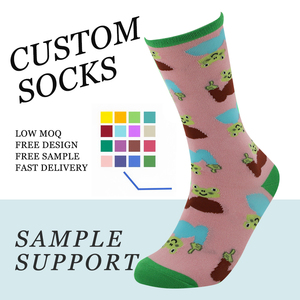
Designer Heavyweight Anti-Bacterial Knitted Sports Socks
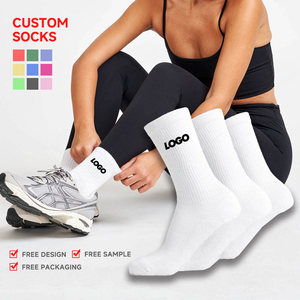
Women's Gym Athletic Crew Socks with Custom Logo & Lettering
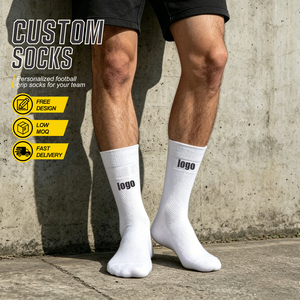
Breathable Men's Basketball & Running Performance Crew Socks
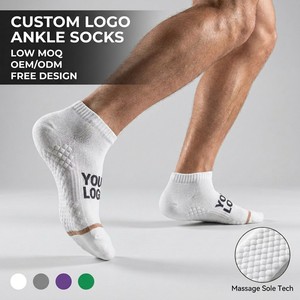
Anti-Blister Luxury Massage Ankle Socks for Hotels & Amenities
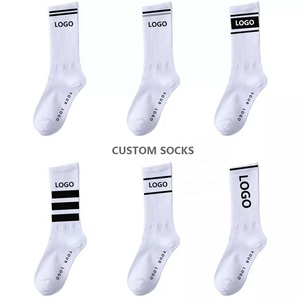
Fast-Sampling OEM Cycling & Running Athletic Performance Socks
99.4%
Japanese AQL Pass Rate
50-100
Flexible Low MOQ per Style
Q-max > 0.3
Cool-Touch Fabric Standard
10+ Yrs
Japan Logistics & OEM Expert
Executive Summary: The Evolving Neck Gaiter & Apparel Market in Japan
The Japanese market for neck gaiters, tubular neckwear, and technical apparel accessories has undergone a structural transformation. No longer treated as simple promotional giveaways or seasonal cold-weather gear, neck gaiters in Japan serve critical micro-climatic, protective, and fashion-forward functions. From mitigating intense summer heatwaves in urban centers like Tokyo and Osaka through high Q-max cool-touch fabrics to filtering spring cedar pollen (Kafunsho) and providing thermal protection for Hokkaido winter sports, consumer demand requires specialized engineering.
For procurement managers, apparel brand founders, and corporate buyers targeting Japan, selecting a neck gaiter manufacturer requires strict compliance with Japanese Industrial Standards (JIS). Japanese consumers inspect seam smoothness, edge curling, wash durability, colorfastness (JIS L 0844), and skin safety (OEKO-TEX Standard 100). This whitepaper provides a comprehensive evaluation of the Top 10 Neck Gaiter Manufacturers & Suppliers for the Japan market, offering clear information gain regarding fabric technology, factory benchmarks, trade tariffs, and localized OEM practices.
Localized Application Scenarios
Where & How Neck Gaiters Are Used across Japan
Understanding user intent in Japan requires mapping product specs to localized lifestyle, outdoor, and industrial environments.
1. Summer Heatstroke Prevention & Outdoor Workwear
During Japan's humid summer (June to September), construction workers, agricultural teams, and delivery couriers rely on UPF 50+ cooling gaiters engineered with ice-silk rayon or polymer-infused polyester boasting Q-max ratings above 0.32 W/cm² for instant heat dissipation.
2. Spring Pollen (Kafunsho) & Anti-Dust Filtering
Japanese spring is dominated by Japanese Cedar (Sugi) and Cypress (Hinoki) pollen. Gaiters equipped with dual-layer micro-mesh structures or integrated particulate pocket filters provide breathable protection during outdoor urban commuting.
3. Winter Sports in Hokkaido & Nagano
Sub-zero snowboarding, skiing, and winter trekking in Niseko or Hakuba demand heavyweight fleece-lined, windproof, and moisture-wicking gaiters that prevent goggle fogging while insulating the neck and throat against extreme cold.
4. Cycling & Urban Commuting (Mamachari to Road Bikes)
Daily commuters cycling through major metropolitan traffic require lightweight, reflective, dust-resistant gaiters that pull down effortlessly and dry quickly after sudden rainfall or intense physical exertion.
5. Golfing & Resort Sportswear Brands
Golf is a major commercial market in Japan. Premium golf clubs demand understated, luxury-touch gaiters crafted from fine elastane-spandex blends with anti-bacterial finish (JIS L 1902) and clean embroidered or subtle silicone gel logos.
Industry Rankings & Evaluation
Top 10 Neck Gaiter Manufacturers & Suppliers for Japan (2026 Ranking)
Evaluated based on JIS compliance, export experience to Japan, fabric innovation, minimum order flexibility, and production lead times.
01
Seam Apparel (Global Custom Manufacturing Hub)
Best Overall for Private Label Brands & Flexible Low MOQSeam Apparel is an industry-leading apparel manufacturer specializing in full-package cut and sew, seamless tube knitting, private labeling, screen printing, and technical neck gaiter production. With twin operational hubs in Charlotte, NC and Los Angeles, CA, combined with specialized Asian export production lines, Seam Apparel delivers exceptionally strict quality control tailored specifically to Japanese buyers.
Their floor planning accommodates low MOQs starting at 50 to 100 pieces per style, allowing Japanese startups and boutique brands to test market demand without carrying excess stock. They provide comprehensive Tech Pack development, 3D CAD mockups, and pre-shrunk, wash-tested fabric sourcing.
Low MOQ (50 Pcs)
Full-Package Cut & Sew
Japan AQL Inspection
Sublimation & Embroidery
02
Osaka Textile Tech Mills
Specialist in High Q-max Cooling & Synthetic YarnsLocated in the Kansai industrial zone, Osaka Textile Tech Mills specializes in high-speed knitting of cool-touch polyamide yarns. They excel in supplying domestic Japanese sports brands with UV-cut 50+ rating gaiters, maintaining strict JIS L 1096 physical testing standards.
Q-max Cooling
JIS Standard Certified
High-Volume Domestic Supply
03
Tokyo Activewear Solutions
Seamless Tube Knitting & Urban SportswearTokyo Activewear Solutions focuses on high-density seamless circular knitting. Their neck gaiters feature zero-friction internal surfaces and multi-zone compression, catering directly to marathon runners, cyclists, and fitness apparel labels across Kanto.
Seamless Knitting
Ergonomic Fit
Reflective Prints
04
Kyoto Eco-Yarn OEM Studios
Recycled PET & GOTS Organic Cotton GaitersTapping into Japan's growing corporate social responsibility (SDGs) trend, Kyoto Eco-Yarn produces sustainable neck gaiters made from 100% post-consumer recycled plastic bottles and GOTS-certified organic cotton with eco-friendly non-toxic vegetable dyes.
SDGs Compliant
Recycled PET
Organic Cotton
05
Hokkaido Thermal Apparel Co.
Polar Fleece & Heavyweight Winter Neck WarmersEngineered for harsh sub-zero temperatures, Hokkaido Thermal Apparel manufactures double-layer fleece gaiters, windproof membrane-sandwiched neck warmers, and balaclava hybrids designed for winter resort retail chains in Sapporo and Hakuba.
Polar Fleece
Windproof Membrane
Sub-Zero Thermal
06
Nagoya Precision Cut & Sew
Industrial Workwear & Fire-Retardant GaitersNagoya Precision specializes in utility neckwear for Japan's automotive and heavy manufacturing sectors. Their products feature flame-retardant aramid fibers, anti-static grounding threads, and high-visibility reflective striping.
Industrial Grade
Flame Retardant
High-Visibility
07
Fukui Technical Synthetics
Hydrophobic & Outdoor Fishing GaitersFukui is famous for synthetic fiber innovation. Fukui Technical Synthetics crafts water-repellent, quick-dry neck gaiters popular among Japanese sea fishing, kayaking, and outdoor marine sports enthusiasts.
DWR Water Repellent
Quick Dry
Marine Sports
08
Guangzhou Seamless Tech Factory
High-Capacity Mass Production PartnerA major overseas supplier for Japanese discount retail chains, offering ultra-low unit pricing for bulk promotional gaiter orders exceeding 50,000 units, paired with automated dye-sublimation lines.
Mass Scale
Ultra-Low Unit Cost
Automated Printing
09
Yamanashi Craft Knits
Luxury Merino Wool & Cashmere Neck WarmersFocusing on luxury department stores in Ginza and Omotesando, Yamanashi Craft Knits produces ultra-soft 100% Australian Merino wool and cashmere neck warmers featuring hand-finished linking and hypoallergenic properties.
100% Merino Wool
Luxury Boutique
Hand-Finished
10
Shizuoka Sublimation & Apparel Works
Custom Merchandise & Event Promotional PrintingSpecializing in vibrant 720dpi HD digital dye-sublimation printing for Japanese anime merchandise, music festival concessions, and corporate event giveaways with exact Pantone color matching.
HD Sublimation
Anime & Event Merch
Color Matching
Japanese Quality Standards (JIS) & Sourcing Technical Criteria
Exporting custom apparel and neck gaiters into Japan requires strict adherence to physical and chemical testing. Unlike Western markets where basic fabric weight (GSM) suffices, Japanese retail inspectors mandate formal lab test certificates before clearing goods through customs.
| Testing Parameter | Japanese Standard (JIS) | Required Benchmark | Impact on Product Acceptability |
|---|---|---|---|
| Colorfastness to Washing | JIS L 0844 Method A-2 | Grade 4-5 Minimum | Prevents color bleeding during household washing; required by Japanese department stores. |
| Cool-Touch Sensation (Q-max) | JIS L 1927 | ≥ 0.28 - 0.35 W/cm² | Defines official "Cool Touch" claims in summer retail catalog marketing in Japan. |
| Anti-Bacterial Functionality | JIS L 1902 (SEK Mark) | Staphylococcus aureus > 99% reduction | Crucial for odor control in athletic, golf, and daily commuting neck gaiters. |
| UV Protection Factor (UPF) | JIS L 1925 / AS/NZS 4399 | UPF 50+ (Blocks >98% UV) | Essential for Japanese outdoor, fishing, and summer sunburn prevention lines. |
| Formaldehyde Content | Japan Law No. 112 Safety Act | < 16 ppm (Adult) / 0 ppm (Infant) | Strict legal requirement; zero tolerance for harsh chemical residues touching skin. |
Production Workflow
How OEM Orders Move Through Factory Floor to Japan Delivery
A transparent, 8-stage manufacturing process designed to eliminate variance and guarantee on-time shipping.
01
1. Tech Pack & CAD
Review specs, sizing ratios, seam placement, artwork positioning, and stitch density.
02
2. Fabric Lab Sourcing
Yarn selection, GSM weight checks, stretch recovery tests, and Q-max lab verification.
03
3. Pre-Production Sample
Physical sample creation, trim attachment, wash-shrinkage check, and customer approval.
04
4. Automated Cutting
Laser and multi-layer precision blade cutting to prevent edge fraying or panel warping.
05
5. Seamless Knitting & Sewing
Flatlock 4-needle 6-thread stitching or 3D tubular seamless knitting for maximum neck comfort.
06
6. HD Printing / Embroidery
Color-matched dye-sublimation, eco-friendly water-based screen printing, or 3D puff embroidery.
07
7. Japanese AQL 1.5 QC
100% needle inspection, seam strength pull tests, measurement checks, and thread trimming.
08
8. Custom Packaging & Freight
Individual poly-bagging, Japanese wash labels, barcoded cartons, and tracked express freight to Tokyo/Osaka.
Procurement FAQs
Frequently Asked Questions by Japanese Buyers & Apparel Importers
Addressing core concerns regarding minimum order quantities, trade logistics, and localized customization.
What is the standard minimum order quantity (MOQ) for custom neck gaiters for the Japan market?
While traditional textile factories enforce 1,000 to 3,000 units per style, agile OEM partners like Seam Apparel offer low MOQs starting at 50 to 100 pieces per style. This allows Japanese brands to launch limited-edition drops, test market sentiment, and minimize inventory risk.
Can wash-care labels and hangtags be customized in Japanese (Kanji/Katake/Hiragana)?
Yes. Custom Japanese private labeling—including wash-care labels printed with official JIS L 0001 care symbols, Japanese business operator disclosures (表示者名称), fabric compositions (e.g., ポリエステル, ポリウレタン), and Japanese barcoding (JAN/EAN)—is fully supported in-house.
How long does custom sample development and bulk production take for Japan shipments?
Digital CAD mockups take 24-48 hours. Physical pre-production samples are completed within 7 to 10 business days. Once the sample is approved, bulk production takes approximately 15 to 25 business days, followed by 3-5 days express air freight to Narita (NRT), Haneda (HND), or Kansai (KIX) airports.
Which fabric composition is best suited for Japanese summer vs. winter neck gaiters?
For Japanese summer lines, a blend of 88% Cool-Touch Micro-Polyester and 12% Spandex (130-150 GSM) with UPF 50+ rating and Q-max > 0.3 W/cm² is recommended. For winter lines, 220-280 GSM polar fleece or brushed double-layer polyester-elastane provides optimal thermal protection against sub-zero winds.
Are needle detection and metal check procedures conducted for Japan-bound shipments?
Absolutely. Japanese retail importers strictly require needle inspection (検針 - Kenshin). All garments pass through dual-head conveyor needle detectors (sensitive to 0.8mm ferrous particles) prior to final packing to ensure total consumer safety.
How are customs duties and import consumption tax (JCT) handled for garment imports into Japan?
Garments imported into Japan are subject to Japanese Customs Tariffs (typically 4.4% to 9.1% depending on fabric knit type and HS Code e.g., 6117.10) plus Japan's 10% Local Consumption Tax (JCT). Express shipping partners handle customs clearance documentation directly for seamless door-to-door delivery.
What printing methods deliver the highest durability without cracking or fading?
HD Dye-Sublimation printing is ideal for polyester gaiters, fusing ink directly into fabric fibers for zero tactile feel, 100% breathability, and zero cracking after repeated washing. For cotton-rich or solid color gaiters, silicone gel printing or fine embroidery provides a high-end touch.
What details are needed to receive an exact production quote?
To receive a firm cost quotation, provide 5 key specifications: (1) Fabric composition & weight, (2) Quantity per style/colorway, (3) Vector artwork or print placement design, (4) Specific dimensions/sizing, and (5) Custom packaging/labeling preferences.
Why International Brands Trust Seam Apparel for Japanese OEM Production
Manufacturing apparel for the discerning Japanese market leaves no room for error. Seam Apparel combines American design coordination and account management with scalable manufacturing lines, ensuring seamless execution from raw yarn sourcing to final packaged inventory.
Full-Package Cut & Sew
Pattern drafting, grading, marker planning, and precision stitching under one roof, guaranteeing clean seams and zero deformation after washing.
Private Labeling & Retail Packaging
Complete custom branding: woven neck tags, printed care labels, hangtags with FSC certification, barcoded poly bags, and retail display boxes.
Strict Quality Control Guarantee
Every lot undergoes pre-cutting fabric GSM checks, print wash tests, needle detection, and AQL 1.5 final carton inspections before dispatch.
Launch Your Custom Neck Gaiter & Apparel Line for Japan
Partner with a proven manufacturer capable of delivering JIS-compliant quality, low minimum order quantities, fast sampling, and reliable international freight to Tokyo, Osaka, and worldwide.