Export-Grade Custom Socks Collection for Nagoya Distributors
Engineered with high-density cylinder gauge machinery, verified under strict European CE compliance standards and customized for Nagoya’s commercial, retail, and industrial apparel buyers.
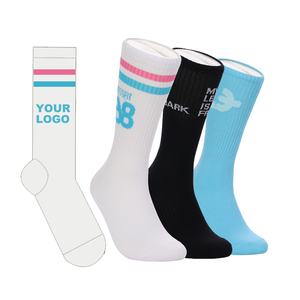
Custom Socks Factory Custom No Minimum Order High Quality Cotton White Socks Custom Socks With logo
Get Catalog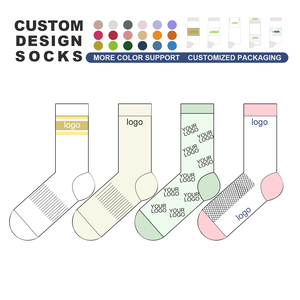
Custom Design Cotton Socken Personalized Logo Embroidered Men Tube Fashion Socks Sox Crew Dress Socks Stock Lot
Get Catalog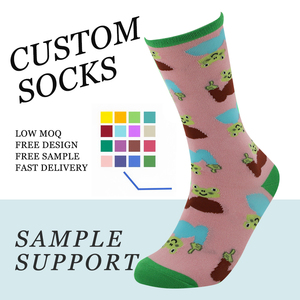
Unisex Crew Personalized Design Your Own Logo Sock Customized Socks Jacquard Custom Logo Socks Low MOQ
Get Catalog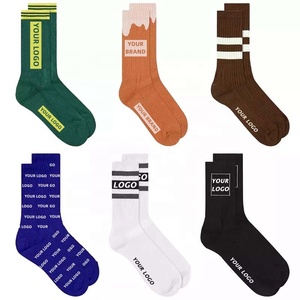
Designer Jacquard Knitted Crew 100% Cotton Thick Anti-Bacterial Brands Socks Casual Letter Bottom Logo Funny Sports Custom
Get Catalog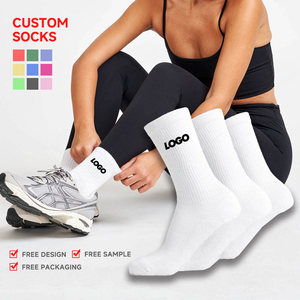
Personalized White Letter Socks Custom Logo Gym Crew Socks for Women Embroidery Sport Athletic Cotton Socks
Get Catalog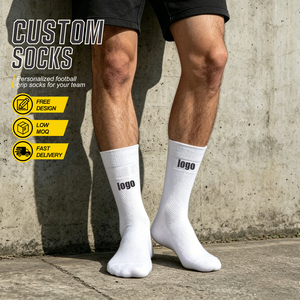
Breathable Sports Basketball Crew Men Socks Custom Socks Logo Sport Socks Running
Get Catalog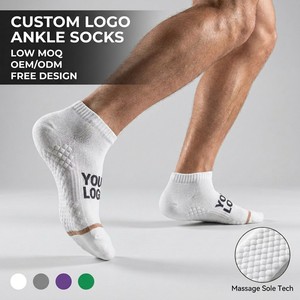
Custom Logo Massage Ankle Socks Anti-Blister Cotton Breathable Low-Cut Luxury Gift Hotel Amenity
Get Catalog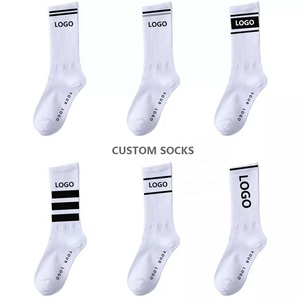
OEM Moq Fast Sample Oem Custom Logo Crew Socks Men Running Sport Socks, Cycle Athletic Custom Logo Basketball Socks
Get CatalogNavigating Custom Sock Sourcing for Nagoya’s Enterprise Landscape
An authoritative guide to technical yarn selections, European Union CE compliance, and localized logistics for Nagoya brands, automotive corporate buyers, and sports retail chains.
CE Certification Rigor
Our export manufacturing facilities adhere strictly to European CE directive frameworks, ensuring compression levels, non-toxic azo-free dye processes, and mechanical safety parameters surpass international standard thresholds for distribution in Japan and worldwide.
Advanced Fiber Metallurgy
Integrating 32S/2 combed long-staple cotton, natural bamboo fibers, moisture-wicking coolmax polyester, and silver-ion antibacterial filaments to provide durable stretch memory, maximum breathability, and zero skin irritation under prolonged wear.
Nagoya Port Logistics
Direct freight dispatch pathways targeting Port of Nagoya (Meiko) and Chubu Centrair International Airport (NGO). Complete customs document clearance, tariff classification (HS Code 6115), and seamless delivery directly to regional fulfillment hubs.
Tailoring Custom Sock Manufacturing for the Chubu & Nagoya Economy
As the industrial nerve center of Japan's Aichi Prefecture, Nagoya represents a unique intersection of advanced manufacturing precision, corporate heritage, active outdoor lifestyle, and trendy urban fashion retail. Sourcing custom footwear components for this market requires a manufacturing partner capable of meeting Japan's uncompromising quality expectations (JIS standards) while maintaining international regulatory compliance such as European CE certifications.
1. Automotive & Industrial Workwear (Toyota Ecosystem & Manufacturing Hubs)
Nagoya and its surrounding metropolitan industrial zones host world-leading automotive manufacturers, precision engineering plants, and heavy machinery suppliers. Corporate workwear in these environments demands high-durability safety apparel. Our CE-certified heavy-duty industrial socks utilize reinforced Terry cushioning on the heel and toe, elastic arch support bands to reduce worker foot fatigue, and anti-static conductive yarn blends. These socks comply with safety footwear standards, preventing blisters and maintaining structural elasticity through industrial laundering cycles.
2. Retail Private Label Brands in Sakae & Meieki Fashion Districts
From the luxury boutiques of Sakae to the bustling commercial complexes around Nagoya Station (Meieki), local Japanese consumers demand flawless stitch density, vibrant color fastness, and zero loose threads. Utilizing state-of-the-art 200-needle computer-controlled circular knitting machines, we deliver ultra-fine Jacquard logos, crisp typography, and seamless hand-linked toes (Rosario toe closure) that meet the fastidious quality standards required by upscale Japanese fashion labels.
3. Athletic & Outdoor Gear (Chubu Mountain Trail & Cycling Culture)
The surrounding geographical landscape of the Chubu region—including the Japanese Alps and coastal cycling pathways—drives significant demand for high-performance athletic footwear. Our custom sport sock production lines feature targeted compression zones, moisture-management mesh channels, and heel-lock anti-slip silicone grippers designed specifically for marathon runners, road cyclists, and alpine trekkers active across Aichi Prefecture.
4. Hospitality, Ryokan & Luxury Corporate Amenities
Nagoya’s booming luxury tourism sector—ranging from traditional Japanese inns (Ryokan) near Atsuta Shrine to international high-rise luxury hotels—increasingly relies on bespoke amenities to elevate guest experience. We supply custom low-cut massage ankle socks, anti-blister travel lounge socks, and eco-friendly organic cotton socks packaged in retail-ready branded boxes with customized Japanese language wash-care tags.
Technological Trend Insight: Silver-Ion & Antimicrobial Knits
In Japanese workplace culture, where removing shoes is customary upon entering homes, traditional establishments, and office spaces, odor control is a paramount consumer demand. Our manufacturing facility integrates microscopic silver-ion infused yarn polymers directly into the sock footbed. Unlike temporary topical coatings, this antimicrobial protection endures over 100 industrial washes, effectively suppressing 99.9% of odor-causing bacteria (Staphylococcus aureus).
Technical Superiority & Manufacturing Benchmark
A direct side-by-side technical evaluation comparing our OEM/ODM socks production line against traditional generic apparel suppliers.
| Technical Evaluation Parameter | Our CE Certified Sock Production | Standard Generic Factories |
|---|---|---|
| Knitting Gauge Capability | High-density 168N / 200N needle cylinder precision | Standard 96N / 144N coarse needle knitting |
| Toe Seam Construction | Rosario Hand-Linked Seamless Toe (Zero friction point) | Machine-stitched bulky raised seam |
| Yarn & Fiber Standard | OEKO-TEX Standard 100, GOTS Organic Cotton, CE Med-Grade | Uncertified recycled low-staple scrap yarn |
| Odor Control Technology | Permanent Silver-Ion embedded matrix fiber | Temporary chemical wash spray (Fades in 3 washes) |
| Minimum Order Quantity (MOQ) | 50 - 100 Pairs per style/size/colorway | 1,000 - 3,000 Pairs rigid batch baseline |
| Quality Assurance & Testing | 100% In-line dimensional, tensile & wash shrinkage test | Random batch sampling (High error margin) |
End-to-End Custom Socks Manufacturing Process
From initial CAD vector proofing to tracked international container delivery at Port of Nagoya, our workflow guarantees 100% specification adherence.
Tech Pack & CAD
Digital vector rendering, PMS color code matching, and stitch density calculation.
Yarn Sourcing
Verification of yarn GSM, color fastness grade 4+, and stretch elasticity ratio.
Cylinder Knitting
Computerized automated needle control executing complex Jacquard and Terry structures.
Linking & Closure
Seamless hand-linking toe closure ensuring flush finish with zero friction points.
Boarding & Setting
High-temperature steam boarding shapes the sock geometry and locks dimensions.
Embroidery & Logo
Precision 3D puff embroidery, woven neck labeling, or anti-slip silicone printing.
QC Inspection
Needle detector sweep, stretch tension stress tests, and seam integrity inspection.
Export Shipping
Custom barcoded retail packaging, export cartons, and direct freight to Nagoya.
Frequently Asked Questions for Nagoya Importers
Addressing critical technical, regulatory, and logistics queries from enterprise sourcing managers in Japan.
What does CE Certification mean for custom sock exports to Japan and Nagoya?
While CE marking is primarily a European conformity standard, having CE certification guarantees that our sock manufacturing processes meet stringent safety, health, and environmental protection requirements. For Japanese importers in Nagoya, this guarantees that all raw materials are free from harmful heavy metals, toxic AZO dyes, and formaldehydes, fully satisfying Japanese Consumer Product Safety requirements (JIS L 1096 standards) and international medical compression device compliance.
What is the minimum order quantity (MOQ) for custom private label sock orders?
Our flexible floor planning supports small-batch enterprise runs starting at just 50 to 100 pairs per style and size ratio. This low MOQ empowers startups in Nagoya’s fashion districts or specialized corporate departments to launch new designs without tying up excessive capital in unproven inventory.
How long does custom sampling and bulk shipping to Nagoya take?
Custom physical sampling takes between 20 to 25 business days after CAD artwork sign-off. Once the prototype is approved, bulk production takes 25 to 30 business days. Transit time via express air freight to Chubu Centrair Airport is approximately 4 to 6 business days, while ocean freight shipments to the Port of Nagoya typically take 10 to 14 days, complete with tracked export documentation.
Can you manufacture specialized tabi split-toe or five-finger socks popular in Japan?
Yes! We operate specialized double-cylinder and split-needle machinery capable of knitting traditional Japanese Tabi socks (two-toe configuration for split sandals/geta) as well as ergonomic 5-finger athletic running socks with independent toe compression, highly appreciated by Japanese outdoor and industrial workers.
What artwork and specifications are required to initiate an accurate quotation?
To provide an instant precise quotation, our team requires five core parameters: (1) Yarn composition preference (e.g., 80% Combed Cotton, 17% Nylon, 3% Spandex), (2) Pantone (PMS) color reference numbers, (3) Sock silhouette and sizing breakdown, (4) Logo execution method (Jacquard knit, embroidery patch, or silicone print), and (5) Quantity per style/colorway.
Transform Your Sock Line with CE-Certified Precision
Partner with an industry-leading OEM/ODM manufacturer. Get custom material swatches, direct factory pricing, and full tech pack consultation tailored to the Nagoya market.
Get Catalog