Featured Workwear Accessories & Apparel Range
High-Performance Custom Workwear & Uniform Portfolio
Engineered for industrial durability, corporate identity, ergonomic comfort, and strict safety compliance across global commercial sectors.
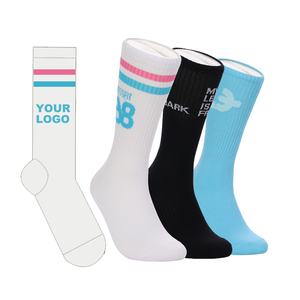
Custom Design Cotton Socken Personalized Logo Embroidered Men Tube Fashion Socks Sox Crew Dress Socks Stock Lot
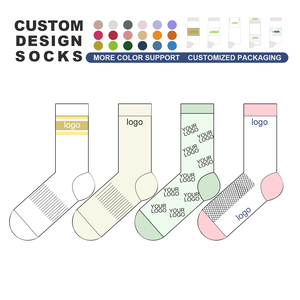
Unisex Crew Personalized Design Your Own Logo Sock Customized Socks Jacquard Custom Logo Socks Low MOQ
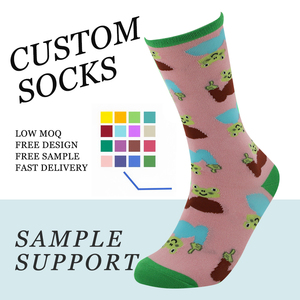
Designer Jacquard Knitted Crew 100% Cotton Thick Anti-Bacterial Brands Socks Casual Letter Bottom Logo Funny Sports Custom
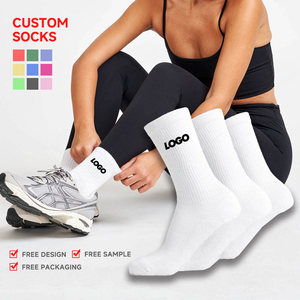
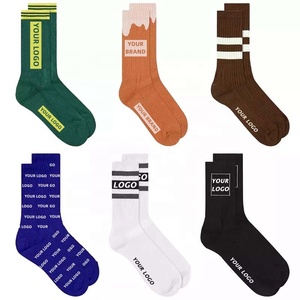
Personalized White Letter Socks Custom Logo Gym Crew Socks for Women Embroidery Sport Athletic Cotton Socks
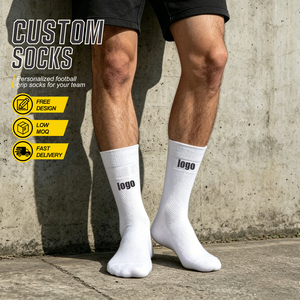
Breathable Sports Basketball Crew Men Socks Custom Socks Logo Sport Socks Running
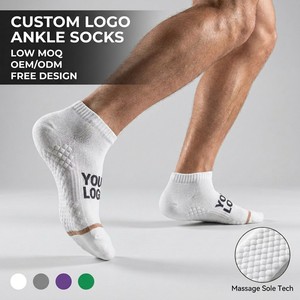
Custom Logo Massage Ankle Socks Anti-Blister Cotton Breathable Low-Cut Luxury Gift Hotel Amenity
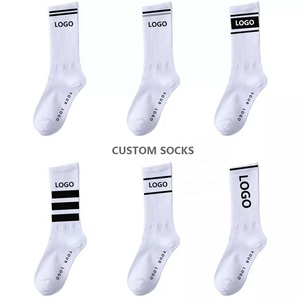
OEM Moq Fast Sample Oem Custom Logo Crew Socks Men Running Sport Socks, Cycle Athletic Custom Logo Basketball Socks
50-100
Flexible Low MOQ Per Style
25-30
Business Days Bulk Production
2 Hubs
Charlotte, NC & Los Angeles, CA
100%
Full-Package QA Inspection
B2B Procurement Whitepaper
Navigating the Global Workwear & Uniform Supply Chain Architecture
An authoritative analysis of technical specifications, vendor verification standards, E-E-A-T compliance, and procurement strategies for modern enterprises.
The Evolution of Workwear Manufacturing: From Utility to High-Performance Engineering
In the contemporary global trade ecosystem, workwear and corporate uniform procurement has transcended basic apparel utility. Industrial enterprises, healthcare conglomerates, logistics giants, and luxury hospitality chains require workwear solutions engineered to meet rigorous safety protocols, brand identity standards, and physiological comfort requirements. Modern workwear sourcing managers evaluate suppliers not merely on unit cost, but on Total Cost of Ownership (TCO), material science compliance (e.g., ISO 20471 high-visibility, NFPA 2112 flame resistance, and ANSI/ISEA standards), supply chain resilience, and ethical manufacturing credentials.
Navigating the vendor landscape requires granular insight into OEM (Original Equipment Manufacturing) vs. ODM (Original Design Manufacturing) capabilities. Leading workwear uniform exporters must maintain vertically integrated floors—spanning tech pack development, CAD pattern grading, raw fabric GSM verification, precision cut-and-sew, customized branding (screen printing, high-density embroidery, sublimation), and multi-stage quality control. As nearshoring and agile manufacturing redefine global supply chains, establishing direct partnerships with dual-hub manufacturers—such as vendors operating strategically in US logistical nodes like Charlotte, NC, and Los Angeles, CA—ensures seamless border control compliance and rapid market deployment.
Full-Package Cut & Sew OEM Manufacturing
Custom pattern making, digital CAD grading, marker planning, and full-package stitching built around exact technical spec sheets. We accommodate intricate tech packs or transform initial client sketches into industrial-grade production patterns.
Flexible Low MOQs for Scalable Testing
Unlike traditional overseas mills enforcing 1,000+ unit lock-ins, our floor planning accommodates low minimum order quantities starting at 50 to 100 units per style. Test regional markets or outfit specialized crews without tying capital into stagnant inventory.
8-Stage Floor QA & Material Inspection
Every batch undergoes rigorous pre-shrinkage testing, tensile seam strength evaluation, GSM verification, wash-fastness checks, and trim audits. Goods are pre-inspected before carton packing to prevent defect slips at destination facilities.
Global Vendor Benchmark
Workwear Uniform Exporter Performance & Evaluation Matrix
Comparative metrics analyzing operational parameters, technical capabilities, and compliance standards across top-tier international apparel exporters.
| Evaluation Parameter | Seam Apparel / Tier 1 US Exporter | Traditional Asian Mass Mills | European Commercial Distributors |
|---|---|---|---|
| Minimum Order Quantity (MOQ) | 50 – 100 Pcs/Style | 500 – 2,000 Pcs/Style | 200 – 500 Pcs/Style |
| Sampling Lead Time | 20 – 25 Business Days | 35 – 50 Business Days | 30 – 40 Business Days |
| Bulk Production Turnaround | 25 – 30 Business Days | 60 – 90 Business Days | 45 – 60 Business Days |
| Customization Scope | Full OEM Cut & Sew, Private Label, Custom Trims | Standard Stock Blanks + Screen Printing Only | Limited Modular Alterations |
| Fabric Compliance & Sourcing | GOTS Organic, OEKO-TEX, FR Fabrics, Performance Knits | Standard Poly/Cotton Blends | EN ISO Certified Industrial Fabrics |
| Logistics & Customs Integration | Tracked DDP Freight, Duty-Paid US-Global Logistics | FOB Port Delivery (Client Handles Customs) | Regional European Distribution |
Material Engineering
Workwear Fabric Innovations & Safety Compliance Standards
Understanding fiber mechanics, finish treatments, and regulatory certifications crucial for high-risk and commercial industrial applications.
Advanced Textile Technologies in Modern Uniform Manufacturing
The longevity and protective performance of corporate workwear depend entirely on initial fiber selection and chemical finishing treatments. Modern industrial uniforms demand engineered fabric blends that balance tear strength with breathability. Key material categories include:
- • Combed Cotton & Fleece Knits (280–450 GSM): Utilized for heavy-duty corporate hoodies, sweatshirts, and work socks. Ring-spun cotton fibers are combed to strip short impurities, preventing pilling and maximizing tensile durability.
- • Flame-Resistant (FR) & Anti-Static Weaves: Inherent FR fibers (Modacrylic/Aramid blends) or treated cotton fabrics compliant with NFPA 70E and EN ISO 11612 standards for electrical power and petrochemical workers.
- • Antimicrobial & Moisture-Wicking Synthetics: Polyester-spandex matrices treated with SILVADUR™ silver-ion or zinc antimicrobial finishes to combat bacterial odor build-up in high-intensity medical and industrial environments.
Information Gain: Specifying the Correct GSM
Grams per Square Meter (GSM) is the vital metric determining uniform weight and seasonality:
140 - 180 GSM: Lightweight summer promotional tees & inner uniform layers.
200 - 260 GSM: Medium-weight polo shirts, tactical crew socks, & medical scrubs.
280 - 380 GSM: Heavyweight work hoodies, fleece jackets, & cargo pants.
400+ GSM: Extreme-cold protective outer shells, industrial canvas jackets & denim apparel.
Strategic Industry Horizon
Workwear Procurement & Sourcing Trends (2026–2035)
Key macro-economic shifts, sustainability mandates, and digital integrations shaping the future of global uniform manufacturing.
1. Closed-Loop Circular & GOTS-Certified Fabrics
Global corporations are enacting strict Scope 3 carbon reduction policies. Workwear uniform procurement now prioritizes GOTS organic cotton, recycled polyester (rPET) derived from ocean plastics, and zero-waste pattern markers to ensure complete circularity.
2. On-Demand Digital Tech Packs & 3D Prototyping
The transition from manual sampling to CLO3D and CAD virtual mockups allows buyers to evaluate garment draping, seam stress points, and custom logo placements prior to cutting bulk fabric—reducing sampling cycles from weeks to under 48 hours.
3. RFID & Smart IoT Sensor Integration
Next-generation industrial uniforms embed washable passive RFID chips for inventory tracking, automated commercial laundry cycles, and worker biometric safety monitoring in high-hazard zones (gas detection, body temperature tracking).
Seamless Execution
The 8-Stage Workwear Manufacturing & Export Workflow
From initial design concept to tracked international cargo clearance—how professional orders progress through our factory floor.
01
Consultation & Concept
We review your corporate branding, budget parameters, target target delivery timeline, and performance requirements.
02
CAD Mockups & Spec
Your tech pack or garment reference is rendered into precise scaled CAD mockups with exact measurement points.
03
Fabric Sourcing & Lab Dip
Fabric weights, stretch ratios, and Pantone color codes are matched and verified via lab dips before cutting.
04
Pre-Production Sample
A physical prototype is stitched and delivered for wear-testing, fit adjustments, and executive sign-off.
05
Precision Cutting & Sewing
Graded patterns are cut cleanly on automated tables and assembled by skilled sewing operators following ISO standards.
06
Branding & Decoration
Screen printing, 3D embroidery, or dye-sublimation are applied, wash-tested, and cured to standard specifications.
07
Full Quality Audit
100% inspection of seams, dimensions, print fastness, and trim attachments performed prior to packaging.
08
Custom Packaging & Shipping
Poly-bagged, barcoded, boxed, and dispatched via tracked ocean or air freight with complete export documentation.
Sourcing Guidance
Frequently Asked Questions for Workwear Uniform Sourcing
Expert answers addressing MOQ policies, lead times, international freight, and technical fabric options.
What is the minimum order quantity (MOQ) for custom workwear uniforms?
Our minimum order quantity starts at just 50 to 100 pieces per style. This low-threshold policy allows growing enterprises, regional contractors, and specialized brands to produce custom-branded uniform runs without committing capital to excessive inventory. For complex structured outerwear or specialized industrial denim, MOQs may shift slightly due to machine setup requirements, but remain significantly lower than traditional mass-production mills.
How long does the entire sampling and bulk production process take?
Physical pre-production sampling typically takes 20 to 25 business days from CAD tech pack sign-off. Once the physical sample is inspected and approved by your team, bulk production runs 25 to 30 business days. Total turnaround timelines depend on order volume, fabric availability, and decoration complexity (e.g., intricate embroidery vs. standard screen printing).
Can you produce complete private label branding for workwear programs?
Yes. We offer complete turnkey private labeling services. This includes custom woven neck tags, printed tagless care labels, branded hangtags, custom zipper pulls, silicone patches, barcoded poly bags, and customized shipper boxes. Garments arrive retail-ready or pre-sorted for direct corporate distribution.
What information do you need to provide an accurate technical quote?
To deliver a firm, binding quote, our engineering team requires five core inputs: (1) Fabric type and target weight (GSM), (2) Pantone color codes or garment shade reference, (3) Size ratio breakdown, (4) Artwork vector files for logos with exact sizing/placement specs, and (5) Total quantity per style. If you do not have a formal tech pack, sending a physical sample garment or detailed sketch allows us to build the specification sheet for you.
How do you handle global shipping, customs clearance, and import duties?
We deliver internationally across North America, Europe, Australia, and the Middle East through established commercial freight partners. We offer Door-to-Door (DDP) freight solutions with complete export manifests, commercial invoices, and tariff classification documentation, ensuring cartons clear customs smoothly without unexpected duty surcharges or port delays.
What quality control assurances do you offer against fabric shrinkage or seam failure?
All raw knit and woven fabrics undergo pre-production lab testing for colorfastness, pilling resistance, and dimensional stability. Cotton-heavy fabrics are pre-shrunk prior to pattern cutting. During assembly, seams are stress-tested for tensile strength under ISO standards, and completed runs undergo a final 100% table inspection before bagging.
Ready to Upgrade Your Corporate Uniform & Workwear Sourcing?
Partner with a trusted global apparel exporter. Contact our production teams in Charlotte, NC and Los Angeles, CA for custom fabric samples, CAD mockups, and competitive B2B quotes.
Get a Quote