Featured Product Lineup & Sourcing Catalog
Explore top-rated textile configurations engineered for high durability, anti-bacterial functionality, and private-label customization. Instant quotes available with flexible low MOQs.
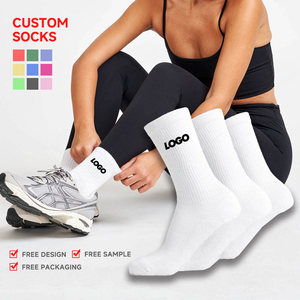
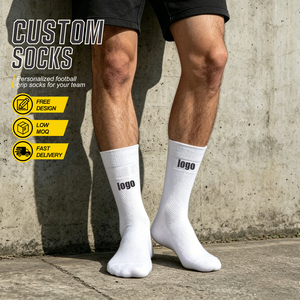
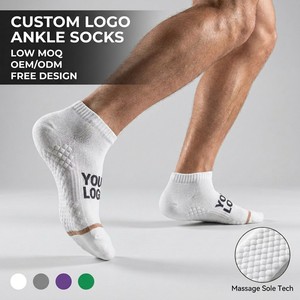
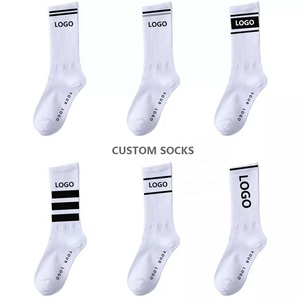
Executive Summary: The 2026 Home Textile & Apparel Sourcing Shift
The global home textile, apparel, and hosiery export landscape is undergoing a systemic transformation driven by shifting consumer demands, stringent ESG compliance regulations, and supply chain volatility. Global procurement directors and brand managers are no longer prioritizing low unit price in isolation. Instead, modern procurement strategies focus heavily on supply chain transparency, speed-to-market, agile Minimum Order Quantities (MOQs), and information gain through material innovation.
As brands navigate direct-to-consumer (D2C) channels and omnichannel retail, managing inventory exposure while maintaining impeccable product quality has become the core determinant of profitability. This whitepaper analyzes the operational benchmarks of leading home textile suppliers, custom apparel factories, and OEM/ODM exporters. By evaluating cut-and-sew precision, technical fiber sourcing, digital sampling protocols, and international logistics execution, we provide procurement executives with an actionable evaluation framework to optimize their contract manufacturing partnerships.
Why Top Global Brands Partner With Us
Bridging international manufacturing facilities with localized customer service hubs in Charlotte, NC and Los Angeles, CA to streamline product launches.
Mitigate inventory risk with flexible short-run production line slots. Test new collections, validate demand, and scale seamlessly into high-volume bulk runs without sacrificing per-unit cost efficiency.
From raw fiber GSM verification to seam pull tests and AQL 2.5 final inspections, every batch undergoes multi-stage quality gates to eliminate defect rates and guarantee pre-shrunk consistency.
Lock in predictable delivery windows with 20-25 business days for sampling and 25-30 business days for bulk production, backed by automated production tracking and export customs documentation.
Our experienced pattern makers transform basic sketches or physical sample garments into digital CAD grading files, spec sheets, and exact yarn weave formulations tailored to your price targets.
Turnkey OEM customization including woven neck tags, printed care labels, custom hangtags, barcoded poly bags, and branded shipping boxes ready for immediate retail or 3PL fulfillment.
Strategic export capabilities serving North America, Europe, Australia, and the Middle East with tracked air/sea freight, pre-cleared customs clearance, and duty optimization support.
Future Procurement Trends (2026-2030)
Understanding long-term textile sourcing shifts enables brand executives to future-proof their supply chains against market disruptions. The next decade will be defined by five core structural trends:
Environmental legislation across North America and the European Union is turning eco-friendly textiles from a luxury feature into a mandatory compliance requirement. Leading home textile suppliers are transitioning to GOTS-certified organic cotton, Recycled Polyester (rPET), and bamboo-derived viscose. Advanced suppliers are integrating blockchain-enabled fiber tracing to prove raw material origin from cotton farm to final knitted fabric.
The boundary between activewear, home textiles, and hosiery has blurred permanently. Consumer preferences favor textiles embedded with silver-ion or copper-infused anti-bacterial treatments, moisture-wicking capillary channels, and thermal regulation yarns. In hosiery and home apparel, jacquard-knit high-density combed cotton with micro-massage footbed technology and friction-reducing heel grips are experiencing double-digit annual growth rates.
To counter geopolitical friction and ocean freight bottlenecks, enterprise procurement teams are adopting a hybrid sourcing strategy. By utilizing domestic logistics hubs—such as our facilities in Charlotte, NC and Los Angeles, CA—for inventory management, sampling sign-offs, and rapid re-orders, brands achieve the cost efficiencies of overseas manufacturing with the responsiveness of local distribution.
Overproduction remains the largest margin erosion factor in the fashion and home goods sectors. Modern procurement frameworks prioritize supplier partnerships capable of supporting 50 to 100-piece initial production runs. Once initial sell-through velocity is confirmed via point-of-sale data, automated re-ordering protocols trigger scaled bulk production within 25 to 30 days.
Industry Development & Manufacturing Technology Roadmap
The global textile manufacturing sector is evolving from labor-intensive manual operations to high-precision digital automated production lines. Below is an overview of key technical innovations reshaping modern contract sewing and knitting factories:
Modern 200-needle cylinder machines enable high-density logo embroidery, complex letter patterns, and intricate jacquard artwork directly woven into breathable cotton matrices. This ensures vector-sharp graphic definition without raising internal stitch friction against the skin.
Computer-aided design platforms allow automated grading across XS to 5XL sizing matrices while optimizing fabric layout software to minimize fabric off-cut waste by up to 18%, directly reducing raw material overheads for brand owners.
State-of-the-art dyeing facilities utilize water-efficient low-impact reactive dyes that pass stringent REACH and OEKO-TEX Standard 100 testing. Pre-shrinking washing cycles lock in fabric dimensional stability, preventing post-laundry distortion.
Offering under-one-roof decoration capabilities—from heavy 3D puff embroidery to high-solids plastisol screen printing and 360-degree digital sublimation—eliminates multi-vendor freight costs and unifies quality control across multi-product drops.
Frequently Asked Sourcing & Procurement Questions
Expert insights answering critical technical and operational questions asked by wholesale buyers, procurement officers, and private label apparel founders.
Ready to Scale Your Textile Production & Supply Chain?
Partner with an established OEM/ODM contract manufacturer equipped to deliver premium fabrics, low minimum order quantities, and guaranteed on-time freight fulfillment. Send your design tech pack or physical sample today.