Engineered Swimwear Solutions: Bulk Order Catalog
Precision-manufactured utilizing anti-chlorine Creora® HighClo™ elastane, UPF50+ UV filtration, and eco-certified recycled polymers.
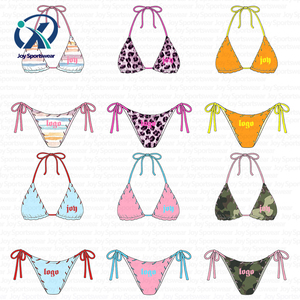
Custom Swimwear Manufacturer OEM Brand Custom Eyelet Lace up Bikini with Logo Swimwear
Get Catalog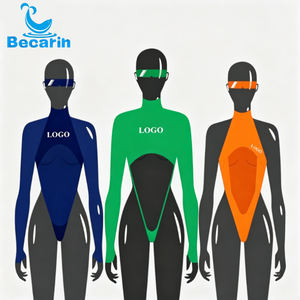
Wholesale Female Beach Wear Bulk Sexy Custom Logo Designer Swimwear Beachwear Bikinis Set
Get Catalog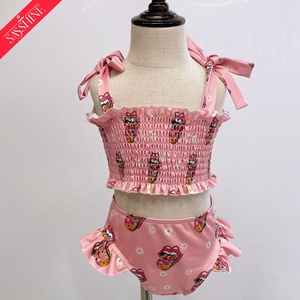
Little Girls Swimwear Split Swimwear Beachwear Summer Girls Boutique Swimsuit Wholesale
Get Catalog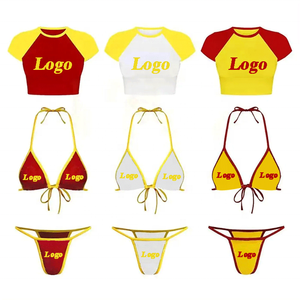
MLY Bathing Suit For Women 2025 Custom LOGO Fitness Sexy Swimsuit 3 Piece Set Micro Mini Bikini
Get Catalog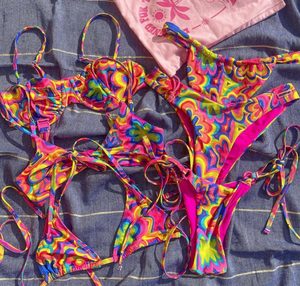
Girls Seamless Reversible Bikini Wholesale Private Label Swimwear
Get Catalog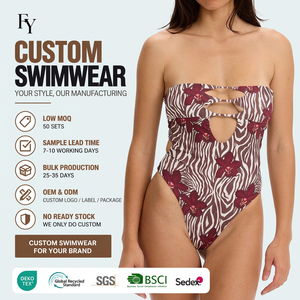
ODM Custom Women Bandeau Strapless Sexy Backless One Piece Print Swimsuit Crossover Strap
Get Catalog
High Quality Custom Made Wholesale Swimwear Women Sexy Made in China
Get Catalog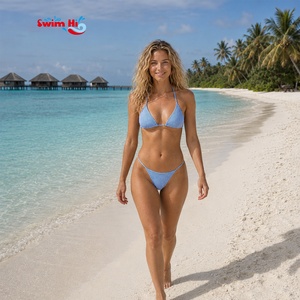
Trendy Blue Stripe Triangle Bikini Fully Customizable Style And Logo B2B Bulk Order
Get CatalogExecutive Overview: The Landscape of Swimwear Manufacturing in China
The global swimwear market is currently undergoing a massive structural transformation, driven by evolving consumer expectations surrounding performance textiles, size inclusivity, aesthetic innovation, and stringent environmental compliance. For global apparel brands, boutique label founders, and international retail importers, identifying trustworthy China wholesale swimwear suppliers and exporters is no longer merely a pricing exercise—it is a strategic imperative that dictates long-term brand equity and operational margin resilience.
China continues to dominate global apparel manufacturing by virtue of its integrated industrial ecosystems. Key manufacturing clusters—such as Xingcheng in Liaoning (renowned for producing over 25% of global swimwear supply), Jinjiang and Shantou in Southern China (specializing in technical warp-knit synthetic textiles and intricate lace/seamless stitching)—offer unprecedented vertical integration. From raw yarn polymer extrusions to automated laser-cutting and ultrasonic seamless bonding, China's supply chain delivers scalable agility across private label OEM (Original Equipment Manufacturing) and ODM (Original Design Manufacturing) workflows.
Information Gain Key Takeaway: Modern B2B swimwear sourcing requires moving beyond basic cut-and-sew evaluation. Superior suppliers must provide material engineering validation, including ISO 105-E01 resistance to chlorinated pool water, ISO 105-C06 wash-fastness, and verified tension recovery percentages under cyclic elastane stretch testing.
Material Engineering & Technical Fabric Specifications
Swimwear garments are subjected to harsh micro-environments: continuous exposure to ultraviolet radiation, corrosive sodium chloride (ocean salt), aggressive chlorine compounds, and body oils mixed with chemical sunscreens. A leading manufacturing partner distinguishes itself through raw material sourcing standards.
1. Advanced Elastomer Matrix: Spandex vs. Creora® HighClo™
Standard elastane degrades quickly under continuous exposure to pool chlorine, resulting in fabric sagging, elasticity loss, and micro-fiber breakdown. Our OEM manufacturing protocols utilize specialized Creora® HighClo™ spandex blended with high-multi polyamides (Nylon 6.6). This technical yarn engineering maintains tension retention and garment structural shape up to 5 times longer than standard stretch fabrics under chlorinated stress.
2. Sustainable Circular Fabrics: GRS ECONYL® & REPREVE® Integration
With environmental, social, and governance (ESG) metrics reshaping retail buying criteria worldwide, premier Chinese exporters have established certified supply chains for recycled synthetic fibers. ECONYL® regenerated nylon (derived from ocean fishing nets and post-industrial waste) and REPREVE® recycled polyester (made from post-consumer plastic bottles) represent core fabric offerings. These textiles carry Global Recycled Standard (GRS) and OEKO-TEX® Standard 100 certifications, ensuring zero toxic chemical off-gassing and complete supply chain traceability.
UPF 50+ Solar Shielding
High-density weave construction blocks over 98% of harmful UVA and UVB solar radiation without relying on chemical wash coatings that degrade over time.
4-Way Stretch Recovery
Biaxial knitting technology provides 360-degree stretch compliance, delivering 95%+ dynamic shape recovery post-extension up to 150% elongation.
Seamless Ultrasonic Bonding
Flatlock four-needle six-thread stitching and thermal edge bonding prevent skin friction, delivering an ultra-smooth profile ideal for high-performance activewear.
B2B Fabric Performance Matrix for Swimwear Procurement
| Fabric Composition | GSM Range | Chlorine Resistance | Target Product Application | Eco-Certification Options |
|---|---|---|---|---|
| 80% Nylon 6.6 / 20% Spandex | 190 - 230 GSM | High (Standard) | Fashion Bikinis, Monokinis, Resortwear | OEKO-TEX Standard 100 |
| 82% Recycled Polyester / 18% Creora® | 200 - 250 GSM | Ultra-High (Pool Certified) | Competitive Swimwear, Active Surf Suits | GRS Certified, REPREVE® Label |
| ECONYL® 78% Regenerated Nylon / 22% EA | 170 - 220 GSM | Superior Long-Life | Luxury Eco-Friendly Boutique Collections | ECONYL®, Global Recycled Standard |
| Textured Ribbed / Jacquard Knits | 240 - 280 GSM | Moderate to High | Trend-Driven Retro Swimwear, Crop Tops | Custom Mill Dye Compliance |
Future Swimwear Procurement & Market Development Trends (2025–2030)
Procurement directors and brand strategists must align their supply chain choices with upcoming retail demand shifts. Intelligence gathered across global trade channels highlights several critical industry dynamics:
1. Hyper-Personalization via Low-MOQ Supply Chains
The traditional requirement of ordering 3,000 units per color style is obsolete. Modern consumer demand shifts rapidly due to social media trend cycles. Suppliers offering agile low MOQs (50 to 100 pieces per style) empower brands to test micro-capsule collections, analyze actual sell-through data, and scale winning inventory lines without suffering high deadstock holding costs.
2. Adaptive Fit & Size-Inclusive Ergonomics
Sizing spectrums have expanded significantly. Modern pattern grading requires intricate mathematical adjustment to grading increments, ensuring that an XL or 3XL garment maintains ergonomic bust support, waist compression, and seam strength without pinching. Advanced 3D CAD pattern-making enables digital fitting simulations on realistic body avatars before fabric is cut.
3. Multi-Functional Athletic-Resort Hybrids
Consumers increasingly expect swimwear to perform double-duty: serving as active water sports gear (surfing, paddleboarding) while doubling as stylish streetwear or resort attire when paired with outerwear. OEM production must incorporate UV protection, quick-dry hydrophobic finishes, and internal hidden support structures (molded cups, underwire, reinforced boning).
Comprehensive Quality Assurance & Factory Audit Protocol
A major risk in international garment sourcing is quality variance between pre-production samples and bulk shipments. Reliable Chinese manufacturing operations employ rigorous Acceptable Quality Limit (AQL 2.5 / 4.0) inspection protocols across every stage of manufacture.
Pre-Production (Raw Material Validation)
Every roll of knit fabric undergoes automated inspection under light boxes to identify micro-slubs, shading variances, or weight discrepancies. Lab dips undergo spectrophotometer color matching to ensure strict adherence to Pantone TCX codes under D65 illuminant conditions.
In-Line & Final Packing Inspection
During sewing, operators verify needle gauge consistency, seam elasticity under pull testing, and print registration on sublimated or screen-printed panels. Final packed cartons are audited for barcode scanning, polybag warning labels, metal needle detection, and humidity levels.
Enterprise Advantage: Why Global Brands Partner With Us
Benchmarked against the original capabilities of industry-leading apparel manufacturing facilities, our production ecosystem is structured to resolve common pain points in custom apparel manufacturing:
- Full-Package Cut & Sew OEM/ODM Capabilities: Complete in-house service spanning tech pack development, pattern drafting, fabric sourcing, grading, sampling, printing, embroidery, private labeling, and custom retail packaging.
- Agile Production Scheduling: Prototyping completed in 7 to 10 business days; full bulk production runs executed within 25 to 30 business days following sample sign-off.
- Dedicated Technical Account Managers: One single point of contact oversees your order throughout pattern development, cutting, decoration, quality inspection, and international shipping clearance.
- Global Logistics & Export Clearance: Full export documentation, tariff classification assistance, and door-to-door tracked freight solutions serving clients across North America, Europe, Australia, and the Middle East.
B2B Sourcing FAQ: Frequently Asked Questions
Our flexible low-MOQ production lines accept initial orders starting at 50 to 100 pieces per style/colorway. This allows start-ups and established brands to launch new designs with minimal capital risk. Bulk volume discounts scale automatically for larger runs.
To provide an accurate landed cost quotation, we require five key specifications: target fabric composition and GSM weight, Pantone color references or print artwork, size ratio breakdown, logo/label placement requirements, and estimated volume per style. If you do not have a formal tech pack, our engineering team can build one from a physical reference sample or detailed sketch.
Yes. We provide complete end-to-end private labeling services including woven neck tags, tagless heat-transfer care labels, custom branded hangtags, hygienic liner stickers, engraved metallic logo plates, customized zippers/drawcords, and custom-printed eco-friendly polybags.
Sample development and fit approval takes approximately 7 to 10 business days once tech packs and fabrics are confirmed. Bulk manufacturing requires 25 to 30 business days following final sample approval, depending on design complexity and order volume.
Yes. All standard swimwear textiles utilize high-grade spandex or Creora® HighClo™ elastane offering UPF 50+ UV solar filtration and verified resistance against chlorine, saltwater corrosion, and degradation from tanning lotions.
Absolutely. We maintain certified supply partnerships for GRS-certified recycled polyesters (REPREVE®) and regenerated ocean nylon (ECONYL®), complete with transaction certificates (TC) to substantiate your brand's sustainability claims.
We operate under strict AQL 2.5 inspection standards. Every garment undergoes dimensional spec verification, seam pull testing, needle detection, and visual inspection before being polybagged and cartoned for shipping.
We support FOB, CIF, DDP (Delivered Duty Paid), and express air shipping options (DHL/FedEx/UPS). Under DDP terms, we manage all export/import duties, customs clearance, and local inland delivery directly to your door or 3PL warehouse.
Scale Your Swimwear Line With China's Top Exporter
Connect directly with our senior garment engineers and procurement specialists to discuss your upcoming collection, request fabric swatches, or receive a formal quotation.