Featured Wholesale Products & Custom Apparel Solutions
Direct from our certified high-precision manufacturing lines. Select a product specification to request instant bulk pricing, tech pack evaluation, and digital proofing.
1. Executive Summary & Semantic Search Intent Analysis
In modern global apparel procurement, evaluating a China best wholesale T-shirts factory & supplier requires moving far beyond basic per-unit price comparisons. According to Google Search Quality Rater Guidelines, modern commercial search queries represent complex buyer intent ("User Intent Mining"). B2B procurement decision-makers are no longer merely seeking cheap commodity garments; they are searching for high Information Gain, operational reliability, fabric engineering precision, structural stability after industrial wash cycles, and verified E-E-A-T (Experience, Expertise, Authoritativeness, and Trustworthiness) credentials.
China's textile apparel eco-system remains the global benchmark for technical cut-and-sew manufacturing, offering unmatched vertical integration from raw fiber cultivation (such as long-staple organic cotton and regenerated viscose) to advanced automated knitting, precision dying, screen printing, custom embroidery, and eco-friendly packaging. This industrial white paper establishes a technical blueprint for brands, wholesalers, e-commerce retailers, and corporate buyers seeking to optimize their supply chain resilience, lower total cost of ownership (TCO), and capture higher market margins.
Core Procurement Insight: True profitability in apparel manufacturing is not derived from minimizing initial unit purchase price, but from mitigating supply chain friction, preventing post-wash garment distortion, eliminating sizing variances, and achieving consistent repeat order fidelity.
2. Structural Foundations: Technical Specifications & Fabric Engineering
The structural integrity of a custom wholesale T-shirt depends heavily on raw material composition, yarn spinning methodology, fabric weight (measured in Grams per Square Meter or GSM), and knit density. Professional buyers must specify technical parameters within their tech pack to ensure consistent manufacturing outputs across high-volume bulk runs.
2.1 Yarn Selection & Fiber Spinning Standards
The touch, printability, and durability of a garment start at the fiber level. Our factory utilizes three primary yarn grading tiers to accommodate varying market price points and retail positioning:
- Carded Open-End Cotton (18s - 24s): Economical choice ideal for short-term promotional campaigns, high-volume giveaway merchandise, and single-event applications. Offers a coarser texture with higher surface fuzz.
- Combed Ring-Spun Cotton (30s - 40s): The standard for mid-to-high-end fashion retail brands. The combing process removes short fibers and impurities, yielding a smooth, durable hand-feel with superior print surface flatness for detailed silk-screen and DTG (Direct-to-Garment) applications.
- Compact Ring-Spun & Micro-Pima Cotton (40s/2 - 60s/2): Luxury grade yarns offering ultra-low pilling rates, exceptional tensile strength, and extraordinary softness. Frequently specified for premium streetwear, luxury private label apparel, and specialized corporate lines.
2.2 Fabric Weight (GSM) Categorization Matrix
Matching fabric GSM to market positioning prevents costly inventory misalignments. We engineer custom knits across four core weight spectrums:
- Lightweight (140 - 160 GSM): Highly breathable, fast-drying knits engineered for activewear underlayers, warm climate retail markets, and summer promotions.
- Mid-Weight Standard (180 - 200 GSM): The universal retail benchmark. Provides an ideal balance of opacity, structure, breathability, and year-round wearing comfort.
- Heavyweight Fashion (220 - 260 GSM): Thick, structured knits popular in modern urban fashion, drop-shoulder streetwear cuts, and premium merchandise lines. Excellent shape retention.
- Super Heavyweight Jersey (280 - 340 GSM): Industrial-grade luxury jersey offering architectural drape, extreme warmth, high thermal mass, and superior longevity.
Fabric Preshrinking & Washing
All knitted fabrics undergo industrial pre-shrinking and heat-setting treatments, restricting post-purchase dimensional shrinkage within a strict <3% tolerance limit.
Color Fastness Excellence
Utilizing high-grade reactive dyes certified to OEKO-TEX Standard 100, achieving Grade 4+ color fastness against washing, rubbing, and UV exposure.
Precision Construction
Twin-needle sleeve and bottom hems, shoulder-to-shoulder taping, and 1x1 elastane-infused ribbing ensure maximum neckband recovery and shape preservation.
3. Industry Development & Future Sourcing Trends (2025–2030)
As global trade dynamics shift toward sustainability, digital integration, and fast-turnaround inventory models, apparel procurement strategies must adapt. Sourcing managers who stay ahead of macro industry shifts gain substantial competitive advantages.
1 Micro-Batch Flexible Manufacturing (Agile Supply Chains)
Traditional rigid minimum order requirements (MOQs of 3,000+ units) are rapidly yielding to dynamic small-batch production schedules. Brands now deploy low MOQ testing drops (50 to 100 units per style) to validate sell-through rates, scaling up bulk re-orders rapidly upon real-time market validation. This minimizes capital risk and overstock liabilities.
2 Circular Economy & Sustainable Fiber Integration
Regulatory frameworks, such as the EU Digital Product Passport (DPP), are compelling brands to adopt traceable eco-friendly materials. Leading manufacturing lines are integrating GOTS-certified organic cotton, recycled polyester (rPET from post-consumer ocean plastics), zero-water dope-dyed yarns, and biodegradable modal fabrics into standard production workflows.
3 Advanced Textile Finishes & Smart Fabrics
Functionality is expanding beyond traditional athleticwear. Modern consumer T-shirts incorporate technical surface treatments including SILVADUR™ anti-bacterial silver-ion protection, moisture-wicking quick-dry technology, UPF 50+ UV shielding, and bio-wash silicone softeners that preserve fabric smoothness through dozens of wash cycles.
4 Digital Tech-Pack Integration & Automated Cutting
Computer-Aided Design (CAD) software integrated with automated laser cut-and-sew systems eliminates human manual cutting discrepancies. 3D digital sampling allows brands to evaluate garment drape, seam tension, and pattern fit virtually—slashing prototype revision cycles from weeks to just 48 hours.
4. Corporate OEM/ODM Advantages & Factory Capabilities
As a leading Chinese apparel custom manufacturer, our facility bridges the gap between boutique design vision and scalable industrial manufacturing. Built around full-package private label execution, our operations give growing brands and global enterprise buyers complete peace of mind.
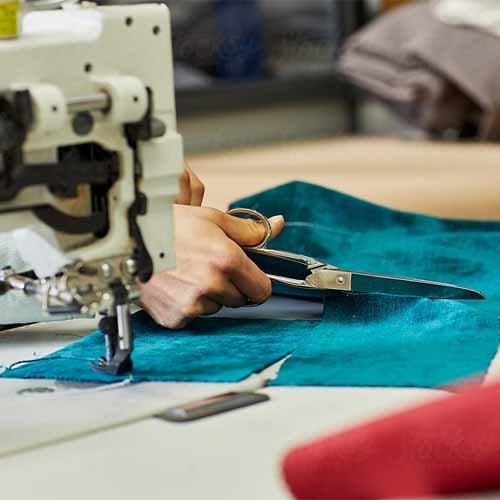
Integrated Full-Package Production Floor
Rather than fragmenting production across disconnected subcontractors (which leads to quality drop-offs and missed delivery dates), we maintain entire garment life-cycle management under one roof:
- Pattern Making & Grading: In-house master pattern makers turn sketches, tech packs, or sample garments into precise digital grading rules across standard US, EU, and Asian sizing matrices.
- Custom Printing & Decoration: Multi-head screen printing (Plastisol, Water-Based, Discharge, Puff, Metallic), Direct-to-Garment (DTG), High-Definition DTF heat transfers, and high-density 3D embroidery.
- Full Private Labeling: Custom woven neck labels, printed satin care tags, custom cardstock hangtags, barcode sticker application, and custom branded poly packaging bags.
Rigorous AQL 2.5 Quality Assurance Framework
Quality control is not an afterthought at the packing table; it is structured into eight distinct operational checkpoints:
- Fabric Receiving Inspection: GSM checks, yarn fault screening, color swatch verification.
- Pre-Shrinkage & Wash Testing: Dimensional stability verification prior to cutting.
- Precision Automated Pattern Cutting: Zero-tolerance laser-guided panel cutting.
- Decoration Proofing & Cure Testing: Wash-testing printed panels for ink adhesion and flex.
- In-Line Assembly Inspection: Seam tension checks, stitch-per-inch (SPI) measurement.
- Ironing & Finishing: Industrial steam pressing and shape setting.
- Final AQL 2.5 Audit: Measurement audit, loose thread trimming, symmetry check.
- Carton Count & Barcode Verification: Polybag sealing and tracked export boxing.

5. Frequently Asked Questions (FAQ) for B2B Wholesale Buyers
Below are analytical answers to the most common queries raised by sourcing directors, inventory managers, and apparel brand founders during factory audits and contract negotiation.
Partner with China's Premier Wholesale T-Shirt Manufacturer
Transform your apparel designs into market-ready retail products. Contact our engineering team today to review your tech pack, request fabric swatches, or obtain an instant bulk quote.