0%

Fashion buyers increasingly need control over fit, fabric, and production timing. That need explains the continuing relevance of Cut and Sew Clothing Manufacturing. It transforms design files and selected materials into constructed garments through cutting, stitching, pressing, and inspection. Unlike purely finished-product sourcing, it lets brands adjust seams, labels, pockets, and measurements before larger production runs. The benefit is tangible. A sample jacket can reveal sleeve torque, puckering, or weak bartacks during real handling.

Industry data supports a closer examination of production choices. Textile Exchange’s Materials Market Report 2024 recorded 124 million tonnes of global fiber production in 2023. It projects production could reach 160 million tonnes by 2030. That scale makes material selection, cutting efficiency, and waste measurement commercially important. McKinsey and The Business of Fashion’s State of Fashion 2025 describes cautious demand and continuing pressure on margins. In that environment, manufacturing decisions cannot rest on attractive sketches alone.

Cut and sew can support smaller pilot runs and practical fit corrections. Results still depend on factory capability and technical communication. A technical pack may specify stitch density, seam allowance, shrinkage tolerance, and approved measurements. Yet no report can replace physical testing. Factories sometimes miss details. Experienced teams therefore combine documented standards with in-line inspection and honest post-sample review. This article examines why Cut and Sew Clothing Manufacturing remains useful for brands seeking control, adaptability, and dependable quality. It also considers its limits, including sampling costs, minimum orders, and production complexity. Mistakes remain possible, but visible mistakes are easier to correct.
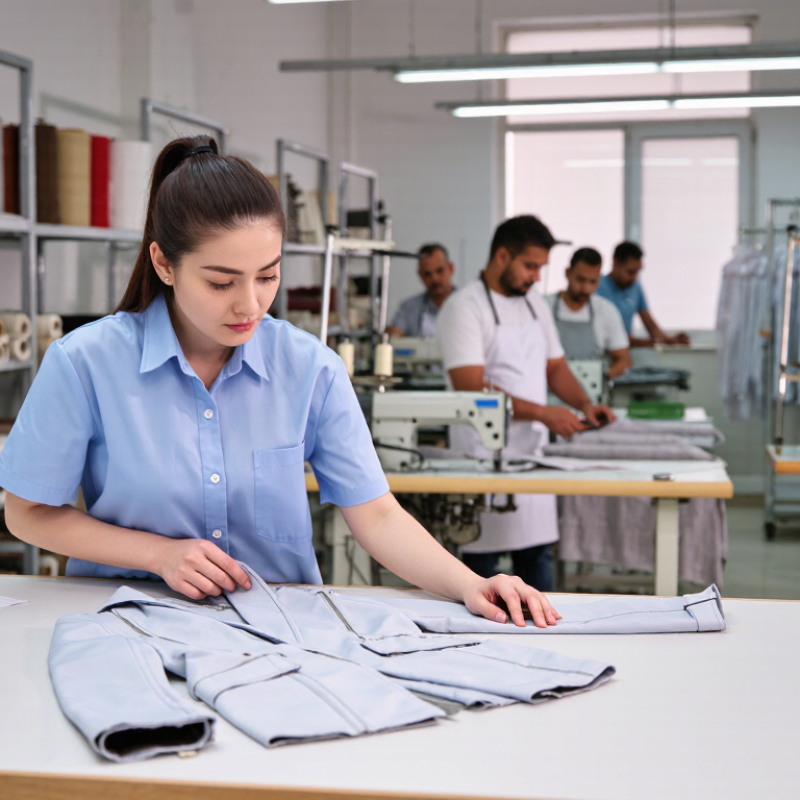
Why Choose Cut and Sew Clothing Manufacturing?

What Is Cut and Sew Clothing Manufacturing?

Cut and sew clothing manufacturing turns fabric into garments through planned, separate operations. Workers inspect fabric rolls before production begins. Pattern pieces are then arranged, or “nested,” to reduce material loss. Cutting machines create panels for sleeves, collars, cuffs, and body sections. Sewing operators assemble these panels in a controlled sequence. Pressing, trimming, measurement checks, and final inspection follow.

This method supports flexible designs and precise sizing. It works with woven fabrics, knits, linings, pockets, and complicated seams. A production technician may check stitch density, seam allowance, shrinkage, and fabric shade under factory lighting. Small errors matter. A slightly twisted sleeve can affect comfort and returns. Cut and sew also allows sampling before bulk production, which helps teams test fit and construction. Yet it demands skilled labor and careful workflow planning. It is not automatically efficient.

The scale of this work is significant. Textile Exchange reported that global fiber production reached about 124 million tonnes in 2023. The report projects roughly 160 million tonnes by 2030. More production increases the need for responsible cutting and material control. Pattern nesting can reduce offcuts, but results vary by fabric width, size range, and design complexity. Some waste remains unavoidable. That is where manufacturers should measure actual cutting-room data, rather than trust optimistic estimates. Quality records, approved samples, and documented inspections make the process more reliable. Mistakes still happen. Good systems make them visible early.

How the Cut and Sew Production Process Works

Why Choose Cut and Sew Clothing Manufacturing?

Cut-and-sew manufacturing turns a design file into a physical garment through controlled, hands-on stages. The process begins with a technical pack, graded measurements, seam allowances, and approved construction details. A sample room then tests the pattern, fabric behavior, and fit on a real body. The first sample is rarely perfect. That is useful. It exposes pulling, twisting, or uncomfortable pressure before bulk production starts. Fabric rolls are inspected for shade, holes, stretch, and recovery.

A marker arranges pattern pieces to reduce waste without changing the garment’s proportions. Layers are spread evenly, then cut with straight knives or automated equipment. Workers bundle matching pieces and attach production notes to prevent size or color confusion. Sewing follows an operation sequence, such as shoulder joining, sleeve setting, side seams, and hems. Each station checks stitch density, seam strength, and alignment before passing the bundle forward. Small errors grow quickly.

Inline inspections catch problems while correction remains practical. During finishing, garments are trimmed, pressed, measured, labeled, and checked against the approved sample. A final audit examines appearance, measurements, loose threads, and packaging condition. Cut-and-sew works well when a project needs distinctive details, flexible fabrics, or precise fit control. However, it demands clear communication and realistic tolerance standards. A rushed pattern or vague measurement can create costly rework. Experienced teams record these lessons, even when the result is not flattering.

Key Benefits of Cut and Sew Manufacturing

Cut and sew manufacturing turns fabric into garments through measured cutting and stitched assembly. Unlike ready-made blanks, it allows control over silhouette, seam placement, panels, and finishing. A technical pattern can shape a curved shoulder or a reinforced pocket. Small details matter.

One key benefit is fit development. Teams can adjust patterns after reviewing size samples, movement tests, and wash results. This process helps reduce twisting seams, tight armholes, and uneven hems. It also supports broader size ranges when measurements are checked carefully. In production, clear tech packs, approved samples, and inline inspections create traceable quality control. Experienced technicians can identify tension problems before hundreds of units are completed.

Cut and sew also offers material flexibility. Cotton, linen, recycled fibers, and performance blends may require different needle settings, seam allowances, or pressing temperatures. That flexibility supports distinctive products, but it demands planning. Fabric waste can rise when patterns are inefficient. Delays may occur when approvals change late. A reliable manufacturer should explain these risks, test construction methods, and document tolerances rather than promise perfection. The process is not always fast. Yet thoughtful sampling can protect fit, durability, and consistency across production runs.

Why Choose Cut and Sew Clothing Manufacturing? - Key Benefits of Cut and Sew Manufacturing

Evaluation Dimension Cut and Sew Manufacturing Typical Industry Consideration Business Benefit
Design Flexibility High; patterns, silhouettes, seam placement, trims, labels, and finishing details can be developed to specification. Suitable for original designs, seasonal collections, uniforms, and technical garments. Creates stronger product differentiation and supports design ownership.
Fabric Selection Broad compatibility with woven, knit, stretch, denim, fleece, mesh, coated, and performance fabrics. Fabric choice depends on garment structure, shrinkage, stretch recovery, weight, and care requirements. Improves control over appearance, comfort, durability, and product performance.
Fit and Sizing Control Patterns can be adjusted through sample fittings, size grading, and measurement reviews. Fit accuracy requires approved measurement charts, graded patterns, and pre-production samples. Reduces fit-related returns and improves customer satisfaction.
Quality Control Quality can be checked at fabric inspection, cutting, sewing, finishing, and final inspection stages. Common checkpoints include shade consistency, seam strength, measurements, workmanship, and defect inspection. Provides earlier defect detection and more consistent production results.
Customization Level High; options include embroidery, printing, appliqué, labels, pockets, closures, piping, and special washes. Additional details may require separate sampling, testing, or production approvals. Supports premium positioning and more precise product specifications.
Minimum Order Quantity Often more adaptable than fully standardized mass production, although minimums vary by factory, fabric, color, and style complexity. Small-batch orders may carry higher unit costs because setup and sampling costs are spread across fewer pieces. Enables controlled product testing before larger-scale production.
Production Lead Time Commonly requires design review, pattern development, sampling, material sourcing, cutting, sewing, finishing, and inspection. A straightforward production run may take several weeks after materials and approvals are ready; complex styles take longer. Provides a structured process for balancing speed, quality, and design accuracy.
Material Efficiency Marker planning and nesting can improve fabric utilization, while complex patterns may generate more cutting waste. Actual utilization depends on garment size range, fabric width, pattern shape, and print direction. Better planning can reduce material waste and improve cost control.
Cost Structure Cost is influenced by fabric, labor minutes, garment complexity, trims, washing, order volume, and quality requirements. Higher customization can increase development and labor costs compared with basic standardized garments. Allows costs to be aligned with product value, complexity, and target market.
Scalability A successful approved sample can be transferred into repeat production with documented specifications. Scaling requires capacity planning, material availability, production-line balancing, and consistent quality procedures. Supports growth from product testing to larger production programs.
Best-Suited Applications Fashion collections, private-label garments, workwear, uniforms, sportswear, lifestyle apparel, and specialized clothing. Most effective when fit, fabric, construction, and finishing details are important to the final product. Offers a practical balance of control, customization, and repeatability.

Note: Production quantities, costs, and lead times vary according to garment complexity, materials, order volume, sampling requirements, and factory capacity.

Materials, Customization, and Quality Control

Why Choose Cut and Sew Clothing Manufacturing?

Materials, Customization, and Quality Control

Cut-and-sew manufacturing gives fabric a practical role in product development. Teams can compare cotton, linen, recycled fibers, and technical blends before cutting. Textile Exchange’s Materials Market Report 2024 estimates global fiber production reached 124 million tonnes in 2023. It may reach 160 million tonnes by 2030. Material selection now affects comfort, durability, waste, and sourcing risk.

Customization is more precise than adding a printed logo. Pattern makers can adjust shoulder width, sleeve volume, pocket depth, and hem shape. They can also test different thread weights and seam finishes. Small production runs support fit testing before larger orders. However, customization costs more time. A detailed specification sheet is essential. Without one, small changes can create repeated mistakes.

Quality control happens throughout the process. Inspectors can check fabric weight, shrinkage, colorfastness, seam strength, and measurement tolerance. The American Society for Quality identifies sampling standards such as ANSI/ASQ Z1.4 for consistent inspection decisions. Still, inspection is not magic. A rushed sample may hide twisting seams or uneven pressing. Cutting tables need clean surfaces, sharp blades, and clear size markers. Workers should record defects with photographs and batch details. That record may feel excessive, but memory is unreliable.

When to Choose Cut and Sew Clothing Production

When to Choose Cut and Sew Clothing Production

Cut-and-sew production suits garments that need more than a standard template. Choose it for unusual panels, shaped seams, layered construction, or precise fit adjustments. A technical designer can review the pattern, fabric behavior, seam allowance, and sample measurements before bulk production.

It also suits smaller, focused collections. Textile Exchange’s 2024 Materials Market Report estimated global fiber production at 124 million tonnes in 2023. The report expects further growth by 2030. That pressure makes material planning important. Cut-and-sew teams can improve marker efficiency and reduce avoidable offcuts. The result is not automatically low-waste. Poor planning still creates waste.

Choose this method when fabric choice affects performance. Stretch recovery, shrinkage, weight, and texture can change the finished shape. A lightweight rib knit may need stabilised shoulder seams. A dense woven fabric may require stronger needles and careful pressing. The International Labour Organization links garment quality with worker skills, production systems, and working conditions. Request a pre-production sample, measurement chart, inline checks, and final inspection records. Cut and sew often costs more than ready-made blanks. Yet it offers stronger control over fit, construction, and revisions. Sometimes the first sample fails. That failure can reveal an overlooked problem.

FAQS

What is cut and sew clothing manufacturing?

It transforms fabric into garments through planned cutting, stitching, pressing, trimming, and inspection. Each operation has a defined purpose.

What happens before fabric is cut?

Workers inspect fabric rolls for defects, shrinkage, and shade differences. Patterns are nested to reduce unnecessary offcuts.

Which garment parts can be produced through this method?

It can create sleeves, collars, cuffs, pockets, linings, body panels, and complicated seams. Small details affect comfort.

How does cut and sew manufacturing improve fit?

Teams adjust patterns after checking size samples, movement, and washing results. This can reduce twisted seams and tight armholes.

Can this method support different fabrics?

Yes. It works with woven fabrics, knits, linen, cotton, recycled fibers, and performance blends. Each material needs suitable settings.

How is garment quality checked during production?

Technicians review stitch density, seam allowance, measurements, shrinkage, and fabric shade. Inline inspections can reveal problems early.

Does cut and sew manufacturing eliminate fabric waste?

No. Pattern nesting can reduce waste, but fabric width, size ranges, and complex designs change the results. Some waste remains.

Why are samples important before bulk production?

Samples help teams test fit, movement, construction, and washing results. They may prevent hundreds of poorly assembled garments.

Is cut and sew manufacturing always efficient?

Not automatically. Skilled labor, careful planning, and timely approvals are necessary. Late changes can create delays.

What should manufacturers measure when controlling materials?

They should record actual cutting-room waste instead of trusting optimistic estimates. Honest records expose weak assumptions. That matters.

Conclusion

Cut and Sew Clothing Manufacturing is a flexible production method in which fabric is cut into individual pattern pieces and sewn together to create finished garments. Unlike pre-knitted or one-piece production methods, it allows manufacturers to control each stage, from pattern development and fabric selection to stitching, finishing, and inspection. The process typically includes design planning, sample creation, material preparation, precision cutting, sewing, pressing, and final quality checks.

This approach offers strong advantages for brands and designers seeking customized styles, accurate fits, unique details, and greater control over garment quality. A wide range of materials can be used, including cotton, linen, wool, denim, and synthetic blends, while customization may involve colors, trims, labels, silhouettes, and construction techniques. Cut and sew production is especially suitable for small or medium production runs, complex designs, premium garments, and products that require careful craftsmanship. It is the right choice when flexibility, durability, and consistent quality are more important than the speed of mass production.

Clara

Clara

Clara is a dedicated marketing professional who combines strategic insight, creative communication, and a deep understanding of the company’s products. With extensive experience in market research, content strategy, and customer-focused communication, she plays an important role in presenting the......