Leggings Manufacturing is moving from basic cut-and-sew production toward technical, data-led performance wear. Global buyers now examine fabric recovery, opacity, seam strength, moisture control, and delivery consistency. Small details matter. A waistband that rolls after three washes can damage an entire private-label launch.
Market estimates show strong commercial momentum. Fortune Business Insights valued the global leggings market at approximately US$39.93 billion in 2023. It projects the market to reach about US$57.87 billion by 2030. Grand View Research also identifies rising athleisure adoption as a major growth driver. However, market figures vary between research firms. Buyers should treat forecasts as direction, not certainty.
Material decisions require closer attention. Textile Exchange’s Materials Market Report 2024 reported that polyester remained the most widely produced fiber globally in 2023. Recycled inputs are increasing, yet traceability remains uneven across supply chains. This gap matters when factories promote recycled nylon, certified spandex, or low-impact dyeing without clear documentation.
Sheng Lu, an associate professor of fashion and apparel studies, has stated, “The apparel industry is highly globalized and interconnected.” His observation explains why factory selection cannot rely on price alone. Production capacity, audit history, laboratory testing, worker safety, and communication speed all influence reliability.
Some manufacturers look impressive online. That is not enough. Experienced buyers request pre-production samples, fabric test reports, stitching inspections, and shipment records before committing. The best suppliers usually explain weaknesses openly. No factory is perfect. A thoughtful comparison of leading leggings manufacturers helps global buyers balance performance, cost, compliance, and long-term trust.
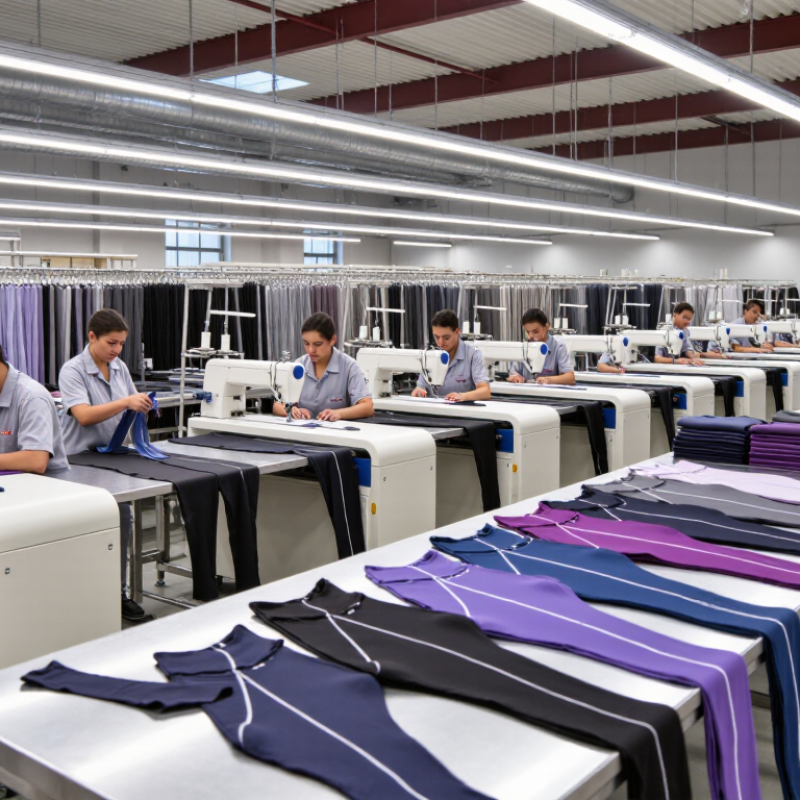
Top Leggings Manufacturers for Global Buyers
Leggings manufacturing has become a specialized part of the global apparel industry. Production clusters now serve sportswear, fashion, maternity, and everyday comfort markets. Experienced manufacturers usually work with nylon, polyester, recycled fibers, and elastane blends. Fabric choice affects stretch recovery, softness, opacity, and drying speed.
Reliable factories control each stage, from knitting and dyeing to cutting, sewing, and packing. A professional supplier should provide fabric test reports, size charts, color references, and sample approval records. Buyers should inspect waistband pressure, flatlock seams, gusset construction, and print durability. Small details matter. A weak seam can damage an entire shipment.
Global buyers also compare minimum order quantities, production capacity, lead times, and communication quality. Factory audits can reveal crowded work areas, poor storage, or inconsistent inspection routines. These warning signs deserve attention. Certifications may support responsible sourcing, but they should be verified rather than accepted without review. Some factories offer low prices by reducing fabric weight or inspection time. That decision may look efficient, but customer returns can become expensive. Even careful specifications sometimes fail during bulk production, especially when colors shift between dye lots. Clear approval samples and staged inspections reduce that risk. Manufacturers serving international markets must also understand labeling, packaging, chemical safety, and destination-market requirements. Capability is not only about making leggings quickly. It is about producing the same fit, finish, and performance across thousands of pieces.
Reliable evaluation starts with fabric performance, not attractive catalog photos. Ask for fabric composition, weight, stretch ratio, and recovery results. A useful sample should stay opaque during movement and resist sagging after repeated wear. Check stitching around the gusset, waistband, and inner leg seams. Small flaws often appear there first.
Manufacturing experience matters when designs include pockets, compression panels, or bonded seams. Request production samples in several sizes, not one perfect piece. Compare measurements against your approved specification sheet. Ask how workers inspect fabric rolls, control shade variation, and record defects. Clear inspection records provide stronger evidence than confident sales promises.
A factory should explain minimum order quantities, sampling fees, production schedules, and replacement procedures in writing. Review its testing process for colorfastness, shrinkage, pilling, and seam strength. Independent test reports can support internal quality checks, but they should match the actual fabric and production batch. Traceable material records also help buyers investigate inconsistent results. Communication deserves attention too. Slow replies may signal future delays. Yet fast replies alone prove little. A polished sample can still hide weak bulk production. This is where many buyers misjudge risk. Keep one sealed approval sample and compare it with the first shipment. Recheck measurements after washing. That extra step may reveal problems earlier.
China remains a major sourcing region for leggings, especially for high-volume private-label orders. Zhejiang and Jiangsu factories often offer strong knitting capacity, fast sampling, and broad fabric choices. Their facilities commonly handle nylon-spandex, polyester blends, brushed fleece, and compression fabrics. Guangdong is useful for buyers needing flexible production and integrated garment finishing. In my sourcing experience, the best results came from factories that measured stretch recovery, fabric weight, and colorfastness before bulk production. Details matter.
Turkey is known for responsive lead times and practical access to European markets. Its manufacturers often specialize in cotton-rich leggings, seamless items, and mid-sized production runs. Portugal focuses more on refined workmanship, softer hand-feel, and traceable fabric sourcing. These strengths suit buyers developing premium everyday collections. However, smaller factories may have limited capacity during seasonal demand. Buyers should confirm machinery availability before approving a purchase order.
Vietnam has developed strong skills in sportswear sewing, flatlock construction, and performance finishing. It can suit buyers seeking comfortable training leggings with durable seams and stable sizing. Bangladesh is competitive for larger basic orders, particularly when cost control and repeat production are priorities. Quality can vary between facilities. An on-site audit, production sample, and independent inspection reduce avoidable surprises. I have also seen buyers focus too heavily on unit price, then face expensive corrections for poor waistband recovery. That assumption deserves reconsideration. Ask for test reports, factory records, social compliance evidence, and clear tolerance charts before production begins.
Global buyers should assess leggings manufacturers through production evidence, not polished samples alone. A reliable factory can explain fabric composition, knitting settings, dye controls, and inspection records. The 2024 Textile Exchange Materials Market Report estimates global fiber production reached 124 million tonnes in 2023. This scale makes material transparency increasingly important.
Look for nylon or polyester with verified recycled content, and request transaction certificates when sustainability claims matter. Ask manufacturers to test stretch recovery, colorfastness, pilling, and seam strength. A practical quality check includes repeated stretching, washing, and drying. Waistbands should return smoothly, while gussets should remain flat against the skin. Small details reveal production discipline.
International buyers should also review in-line inspections and final AQL records. Independent laboratories can test against relevant ISO or AATCC methods. The Global Organic Textile Standard’s 2024 reporting also highlights the value of traceability across processing stages. However, certificates do not guarantee perfect garments. Factories can still miss shade variation or uneven stitching. That happens. A strong supplier records the defect, identifies its cause, and corrects the process before shipment. Buyers should request photos, test reports, and corrective-action evidence. Price alone is a weak measure of quality. Consistent data is stronger.
Production Standards, Materials, and Quality Control
How Global Buyers Select the Right Leggings Supplier
Global buyers rarely choose a leggings manufacturer by price alone. The Grand View Research Activewear Market Report estimates the global market reached about $412 billion in 2023. That scale increases pressure on quality, delivery, and material transparency. I recommend requesting fabric samples before discussing large orders. Check GSM, stretch recovery, pilling, colorfastness, and seam strength. A waistband that rolls after three washes is still a failure.
Supplier claims need evidence. The Textile Exchange Materials Market Report 2024 recorded global fiber production at 124 million tonnes in 2023, with polyester representing about 59%. Buyers should ask whether polyester is virgin or recycled. Request transaction certificates, test reports, and production photographs. Certifications matter, but they should match the actual factory. A certificate alone proves little.
Production experience also matters. Ask for the supplier’s monthly capacity, minimum order quantity, sampling time, and peak-season schedule. A factory promising ten-day delivery may struggle during holiday demand. Check how it handles rejected panels, shade variation, and late fabric arrivals. These details reveal operational maturity. No supplier looks perfect on paper. I once underestimated packaging space and paid more for freight. That mistake changed my evaluation sheet. Today, I compare landed cost, not the factory quote. Reliable communication matters too, especially when fit comments cross several time zones.
| Evaluation Dimension | Buyer Benchmark | Suggested Weight | Why It Matters for Leggings | Verification Evidence to Request |
|---|---|---|---|---|
| Product Quality | Consistent stretch, recovery, opacity, stitching, and waistband performance across production lots | 25% | Leggings are exposed to repeated stretching, washing, friction, and body movement. Poor recovery or thin fabric can quickly cause sagging, pilling, or transparency. | Pre-production sample, approved measurement chart, fabric test report, wash-test results, colorfastness report, and documented inspection records. |
| Fabric Composition | Common performance blends include polyester or nylon combined with elastane; exact ratios should match the product purpose | 15% | Fiber content affects compression, softness, moisture management, durability, drying speed, and retail labeling requirements. | Fiber-content declaration, third-party composition test, fabric technical specification, and confirmation that bulk fabric matches the approved sample. |
| Production Capacity | Capacity should be demonstrated with a monthly output plan, not only a quoted maximum quantity | 12% | Reliable capacity is essential for seasonal launches, replenishment programs, and multi-size or multi-color orders. | Production-line details, monthly capacity by product category, current utilization, workforce information, and a realistic production schedule. |
| Minimum Order Quantity | Indicative private-label ranges often start around 100–500 pieces per style or color; larger factories may require higher quantities | 8% | MOQ influences inventory risk, cash flow, color selection, and the feasibility of testing a new market. | Written MOQ by style, color, size ratio, fabric, printing, embroidery, packaging, and repeat-order conditions. |
| Lead Time | Approximately 30–60 days for standard repeat production after approval; development and custom fabric sourcing may take longer | 10% | Lead time affects launch dates, promotional campaigns, stock availability, and the cost of expedited freight. | Sample timeline, bulk-production schedule, fabric reservation policy, capacity calendar, and written late-delivery procedure. |
| Compliance and Testing | Applicable product-safety, chemical, labeling, and social-compliance requirements must be defined by destination market | 12% | Importers may be responsible for proving that textiles meet destination-country requirements, including restricted-substance and labeling rules. | Recent laboratory reports, restricted-substance test results, social-audit documents, factory policies, and destination-market compliance declarations. |
| Organic or Responsible Materials | For organic claims, GOTS products generally require at least 70% certified organic fibers; the correct label grade must be confirmed | 5% | Environmental claims affect product positioning and must be supported by traceable, verifiable documentation. | Valid certification scope certificate, transaction certificate where applicable, fiber traceability records, and approved product-label wording. |
| Quality Management | A documented quality-management system with defined inspection checkpoints and corrective-action procedures | 5% | Repeatable controls reduce measurement variation, sewing defects, shade differences, packing errors, and customer returns. | Quality manual, inspection checklist, inline and final inspection records, defect classification standard, and corrective-action reports. |
| Customization Capability | Ability to support custom patterns, compression levels, waistbands, pockets, labels, packaging, and size grading | 5% | Technical flexibility allows buyers to create differentiated products rather than relying only on standard designs. | Pattern-development process, tech-pack review, grading rules, sample revisions, available trims, and intellectual-property confidentiality agreement. |
| Cost Transparency | Quotation should separate garment cost, fabric, trims, packaging, sampling, testing, tooling, and shipping terms | 3% | A low unit price may hide fabric substitutions, additional development charges, or excluded packaging and testing costs. | Itemized quotation, payment terms, Incoterms, surcharge policy, sample fees, testing fees, and price-validity period. |
Common choices include nylon, polyester, recycled fibers, and elastane blends. Fabric selection affects stretch, softness, opacity, and drying speed. Small differences matter.
Review fabric reports, size charts, color references, and sample approval records. Ask about knitting, dyeing, cutting, sewing, and packing. Polished samples are not enough.
Check waistband pressure, flatlock seams, gusset construction, and print durability. Stretch the waistband and examine the stitching closely. Weak seams can ruin a shipment.
Request tests for stretch recovery, colorfastness, pilling, and seam strength. Wash and dry samples repeatedly. The waistband should recover smoothly afterward.
Request verified material records and transaction documents. Traceability should cover processing stages. Claims still require review.
Audits may reveal crowded workspaces, poor storage, or inconsistent inspections. These details suggest process problems. Do not ignore them.
Colors may shift between dye lots during bulk production. Approved samples create a clear reference. Staged inspections catch uneven stitching and shade changes earlier.
Not necessarily. Some factories reduce fabric weight or inspection time to lower prices. Returns may cost more later. Price alone misleads.
No certification guarantees flawless garments. Factories can still miss shade variation or uneven stitching. That happens. Buyers should request corrective-action evidence.
Compare minimum order quantities, capacity, lead times, communication, packaging, labeling, and destination-market requirements. Consistent performance matters more than speed alone. Mistakes remain possible.
Leggings Manufacturing has become a dynamic global industry driven by demand for comfortable, versatile, and performance-oriented apparel. Successful production depends on more than competitive pricing: buyers must assess a supplier’s technical capabilities, production capacity, communication, lead times, and ability to support custom designs. Different manufacturing regions may specialize in areas such as advanced fabric development, efficient large-volume production, detailed sewing, or flexible small-batch orders, making regional expertise an important consideration.
High-quality leggings require carefully selected materials, including stretch fabrics that provide comfort, recovery, breathability, and durability. Reliable manufacturers follow consistent production standards and maintain strict quality-control procedures throughout fabric inspection, cutting, sewing, finishing, and final packing. Global buyers should compare suppliers through samples, factory evaluations, certifications, transparent quotations, and clear agreements on specifications and delivery schedules. By balancing quality, innovation, reliability, sustainability, and overall cost, buyers can establish productive partnerships and select a leggings manufacturer suited to their long-term business goals.