Finding the right underwear manufacturer in China requires more than comparing factory prices. It demands practical research, clear communication, and careful verification. A reliable partner should understand fabric behavior, body comfort, stitching strength, sizing, and packaging requirements. These details often decide whether a product earns repeat orders.
This guide explains how to evaluate suppliers involved in Underwear Manufacturing. It covers factory experience, sample development, minimum order quantities, production capacity, and quality control. You will also learn how to review certifications, inspect workshops, and confirm material traceability. Request physical samples before approving bulk production. Check elastic recovery, seam finishing, color consistency, and washing performance.
Small details matter.
A professional factory should answer questions with evidence, not vague promises. Ask for production photos, test reports, client references, and a realistic delivery schedule. Factory visits can reveal important facts, such as crowded cutting tables or poorly organized storage areas. However, online verification alone may not be enough. Third-party inspections can reduce uncertainty before payment.
No supplier is perfect.
Even experienced buyers can overlook communication delays or unclear revision terms. I have found that written specifications prevent many avoidable disputes. Record fabric composition, measurements, tolerances, labeling, inspection standards, and payment milestones. A low quote may appear attractive, but inconsistent quality can cost more later. The best manufacturer balances technical skill, ethical production, transparent communication, and dependable after-sales support.
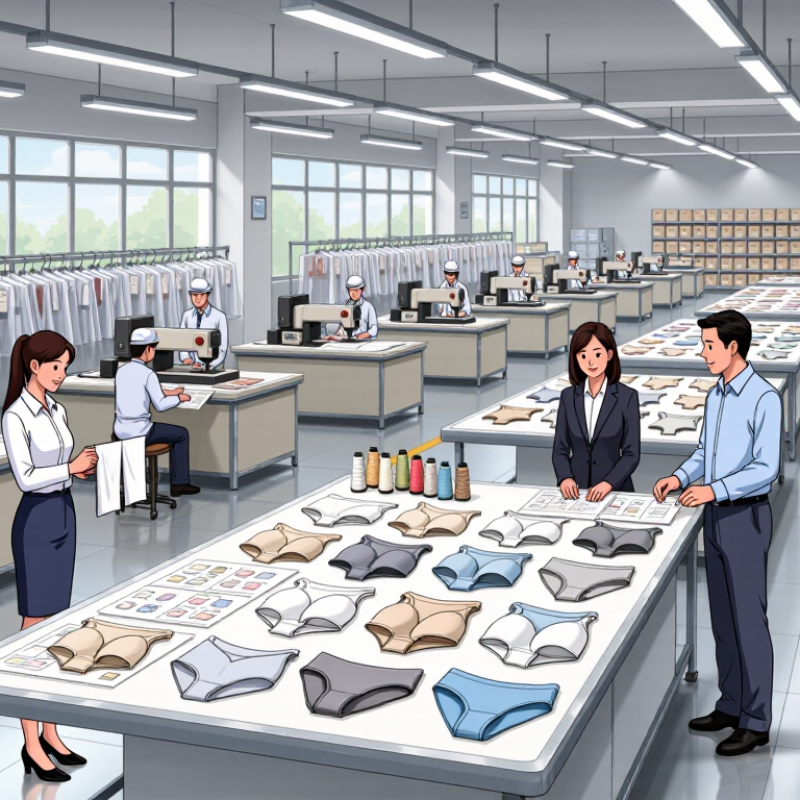
Before contacting an underwear manufacturer in China, define the product clearly. Describe the target customer, wearing occasion, price range, and sales channel. A factory cannot quote accurately from “high-quality underwear” alone.
Write down the fabric composition, weight, stretch, color references, and size range. Specify waistband width, stitching method, gusset shape, labels, and packaging details. Include a simple tech pack with measurements and tolerance limits. For example, request 92% cotton and 8% elastane, 180 GSM fabric, and a three-centimeter waistband. Small details prevent expensive misunderstandings.
Your business goals also need measurable limits. Set the expected order quantity, sample deadline, launch date, and acceptable unit cost. Ask whether the manufacturer supports small trial orders and repeat production. Request fabric certificates, inspection records, and pre-shipment quality checks. These documents do not replace physical testing, but they improve supplier reliability.
I once underestimated color consistency between samples and bulk production.
That mistake affected the launch schedule. Now, I require a sealed reference sample and written approval before production begins. Still, this process is not perfect. Some fit problems appear only after several hours of wear. Test the underwear through washing, stretching, and movement before confirming the final order. A practical requirement list helps you compare factories fairly and identify suppliers who understand your product, not just your budget.
Researching Chinese underwear manufacturers becomes easier when you compare regional strengths, not only factory quotations. China Customs reported approximately US$293.6 billion in textile and apparel exports in 2023. WTO’s World Trade Statistical Review 2024 also identifies China as the leading clothing exporter. These figures show scale, but scale does not guarantee suitable underwear production.
Zhejiang is strong in knitted fabrics, elastic materials, and flexible small-batch sourcing. Shaoxing offers a dense textile supply chain, which can shorten fabric development and sampling time. Guangdong, especially the Shantou area, has deep experience in underwear sewing, lace, moulded cups, and rapid product changes. Fujian and Jiangsu are useful for larger production programs, with established knitting, dyeing, and garment facilities. The China Textile Industry Federation regularly identifies these provinces among major textile and apparel manufacturing bases.
Compare the region with your product requirements. For seamless underwear, inspect knitting machines and edge bonding capabilities. For lace styles, review pattern precision and shrinkage testing. Ask each factory for its ISO 9001 records, fabric test reports, needle-control procedures, and recent production references. Certification alone is not enough. I have seen impressive factory tours hide weak quality follow-up. That risk is easy to underestimate. Request pre-production samples, wash-test results, measurement records, and a clear correction process. Regional advantages help, but direct verification still matters.
| Manufacturing Region | Regional Manufacturing Profile | Typical Underwear Categories | Key Strengths | Best Fit for Buyers | Potential Limitations | Supplier-Search Priority |
|---|---|---|---|---|---|---|
| Shantou, Guangdong Chaonan District | One of China’s best-known lingerie and underwear production clusters, especially around Chaonan, with integrated textile, knitting, dyeing, printing, embroidery, sewing and accessory supply chains. | Bras, panties, lingerie sets, seamless underwear, thermal underwear, children’s underwear and elasticated garments. | Strong category specialization; broad supporting-supplier network; suitable for coordinated product development and repeat production. | Private-label brands, lingerie collections, multi-style programs and buyers seeking a concentrated underwear supply chain. | Quality and compliance capabilities vary significantly between factories; environmental and testing documentation should be checked carefully. |
★★★★★ Prioritize for underwear specialization and supply-chain depth. |
| Yiwu, Zhejiang Small-Commodity Cluster | A major small-commodity and trading center with many garment, hosiery, accessory and packaging suppliers. The region is particularly useful for sourcing coordinated components and ready-to-sell product ranges. | Basic panties, socks, shapewear, seamless items, thermal underwear, hosiery and promotional or value-oriented underwear. | Wide product variety; convenient accessory and packaging sourcing; efficient for product sampling and mixed-category purchasing. | E-commerce sellers, wholesalers, value-focused importers and buyers requiring many styles in relatively small purchasing programs. | Some suppliers operate mainly as trading companies rather than vertically integrated manufacturers; factory verification is essential. |
★★★★☆ Prioritize for variety, sourcing flexibility and product consolidation. |
| Nanhai, Foshan, Guangdong Apparel Cluster | Part of the Pearl River Delta’s developed apparel and textile manufacturing network, with access to fabric, trims, garment processing, logistics and export-service providers. | Bras, shapewear, sports underwear, seamless garments, functional base layers and mid-to-premium private-label products. | Strong access to technical fabrics and garment engineering; convenient logistics links through the Greater Bay Area; good support for structured product development. | Brands requiring fabric development, fit refinement, functional features or a more organized production process. | Labor and operating costs may be higher than in some inland or highly price-focused production areas; minimum order requirements differ by factory. |
★★★★★ Prioritize for technical products and development-oriented programs. |
| Guangzhou, Guangdong Design and Export Hub | A major fashion, apparel and international trade center with strong access to design studios, fabric markets, sample rooms, logistics providers and export-service companies. | Fashion lingerie, bras, panties, shapewear, sleepwear, active underwear and trend-led collections. | Strong design and sampling ecosystem; easy access to fashion materials and market information; convenient for product iteration and buyer meetings. | Fashion brands, design-led labels, buyers needing frequent sampling and businesses combining sourcing with product development. | The city includes both factories and intermediaries; supplier type, production ownership and quality-control responsibilities must be confirmed. |
★★★★☆ Prioritize for design support, sampling and export coordination. |
| Cixi and Ningbo, Zhejiang Textile and Export Network | Part of the Yangtze River Delta manufacturing and port network, with access to knitting, textile, garment, machinery and export logistics capabilities. | Knitted underwear, thermal underwear, functional base layers, seamless products and everyday basics. | Good regional access to knitted fabrics, textile machinery and international shipping through Ningbo-Zhoushan Port; suitable for standardized production. | Buyers focused on basics, thermal products, functional textiles and stable export logistics. | The region is less concentrated in fashion lingerie than specialist lingerie clusters; product development resources can differ by supplier. |
★★★★☆ Prioritize for knitted basics, thermal wear and logistics efficiency. |
| Shantou and Jieyang, Guangdong Regional Supply Chain | The eastern Guangdong apparel network combines underwear production with textile, accessories, packaging and related light-manufacturing activities. | Everyday underwear, children’s underwear, pajamas, homewear, lingerie basics and elasticated garments. | Flexible supplier base; access to supporting materials; practical for multi-category apparel programs connected to underwear. | Wholesalers, growing brands and importers sourcing underwear together with sleepwear, homewear or children’s apparel. | Production standards, equipment and export experience are not uniform across suppliers; audits and sample approval are important. |
★★★★☆ Prioritize for flexible product portfolios and regional sourcing. |
How to Find the Best Underwear Manufacturer in China?
A capable factory should show more than attractive samples. Check its sewing lines, cutting room, sample team, and monthly capacity. Ask how many machines handle flatlock, coverstitch, elastic insertion, and bartacking. Then compare those capabilities with your product’s construction.
Quality systems matter more than polished presentations. Request records for incoming fabric inspection, inline checks, final inspections, and corrective actions. Check seam strength, shrinkage, colorfastness, pH, formaldehyde, and skin-contact safety. For elastic underwear, test recovery after repeated washing. Small details expose weak control.
The ISO Survey 2023 recorded more than 1.2 million ISO 9001 certificates worldwide. However, ISO 9001 certification does not guarantee excellent underwear. Verify the certificate’s scope, factory address, expiry date, and certification body. A practical audit should also review calibration records and complaint data. Ask for recent inspection reports, not selected successes.
OEKO-TEX Standard 100 testing can support chemical safety claims for textile components. Textile Exchange’s 2024 Materials Market Report also highlights the growing need for credible material traceability. These documents help, but they are not magic. A certificate may cover fabric, not finished garments. That distinction is easy to miss.
Visit the production floor if possible. Watch operators change styles. Observe how rejected pieces are isolated. Ask who approves repairs and how failures are tracked. I would also run a pilot order before committing to large volumes. Samples can look perfect. Production may disagree. In my view, that risk deserves written evidence, not optimism.
Factory capabilities, certifications, and quality-system benchmarks to verify before placing an order.
The chart presents objective checkpoints commonly used in apparel sourcing. AQL values refer to established ANSI/ASQ Z1.4 sampling levels, while certification and testing checkpoints should be verified through current documents, scope details, and independent laboratory reports. AQL is an acceptance sampling limit, not a guaranteed defect percentage.
Finding a capable underwear manufacturer in China starts with evidence, not polished factory photos.
Request samples made to your measurements, fabric composition, stitching, elastic recovery, and packaging requirements. Ask for at least one revised sample. The first version may fit well but fail after washing. I once overlooked this detail, and the waistband became loose after three cycles. Record measurements before washing, then compare them after cold and warm cycles. Check seam strength, color stability, odor, and comfort against skin. Keep dated photos and comments for every sample.
Communication should be tested before placing a large order. Ask the contact to explain production steps in writing. Verify whether they can answer technical questions and clarify unclear points. Send a specification sheet with sketches, size charts, fabric percentages, and tolerance ranges. Set response deadlines and confirm who approves changes. A video call can reveal whether the team understands your requirements. Good communication is measurable. Do not rely on friendliness alone. Vague replies may create vague production results.
Review detailed pricing instead of comparing unit prices only.
Request separate costs for fabric, cutting, sewing, sampling, packaging, freight, and revisions. Confirm the minimum order quantity, lead time, payment schedule, and process for defective units. An unusually low quote deserves questions. It may exclude testing, stronger elastic, or final inspection. Compare two or three written offers using identical specifications. I would still leave room for mistakes; early estimates are rarely perfect. A reliable manufacturer explains price changes before approval, not after production starts.
How to Find the Best Underwear Manufacturer in China?
A reliable manufacturer should provide more than a polished sample. Ask for a written contract covering fabric composition, size tolerances, color standards, and workmanship. Include approved sample photos and physical samples as references. Payment stages should match production milestones, not promises. A practical schedule should show sampling, material purchasing, cutting, sewing, inspection, and packing dates. Keep communication records. They may become important later.
Production terms need careful checking. Confirm who pays for testing, rework, storage, and unexpected delays. Specify acceptable defects, inspection methods, and the response time for corrections. For underwear, elastic recovery, seam strength, waistband comfort, and wash performance deserve attention. I once overlooked packaging dimensions on a small order. The cartons required extra space, and shipping costs increased. That mistake was avoidable.
Tips: Request a pre-production meeting and a signed approval sheet. Confirm the final carton size, gross weight, shipping marks, and destination documents. Compare the agreed Incoterm with the actual services provided. Ask for weekly progress photos, but do not treat photos as proof of quality. An independent inspection before shipment is safer. Leave realistic time for corrections. Deadlines often look shorter on paper.
Review the cutting room, sewing lines, sample team, and monthly production capacity. Check flatlock, coverstitch, elastic insertion, and bartacking machines. Match these tools with your garment construction. Samples can mislead.
Request fabric inspection, inline inspection, final inspection, and corrective-action records. Check seam strength, shrinkage, colorfastness, pH, and skin-contact safety. Ask for recent reports, not selected successes.
No. A certificate supports a claim but does not prove consistent production quality. Verify its scope, factory address, expiry date, and issuing body. The certificate may cover fabric only. That distinction matters.
Test waistband and leg elastic after repeated washing. Measure recovery, stretching, comfort, and twisting. Record the results beside the approved sample. One wash is not enough.
Visit if possible. Watch operators change styles and observe rejected pieces. Ask who approves repairs and how failures are recorded. Small details reveal weak control.
A pilot order reduces risk. Production may differ from perfect samples. Check measurements, seams, packaging, and wash performance. I would still keep written evidence. Optimism is not a control system.
Specify fabric composition, size tolerances, colors, workmanship, and approved samples. Define defect standards, inspection methods, correction times, and payment milestones. Include rework, testing, storage, and delay responsibilities.
Confirm carton dimensions, gross weight, shipping marks, destination documents, and delivery terms. Request weekly progress photos, but do not treat them as quality proof. Arrange independent inspection before shipment. Leave extra correction time.
Finding the best underwear manufacturer in China begins with clearly defining your product requirements and business goals. Determine the underwear styles, fabrics, sizes, colors, design details, target quality level, order volume, and expected delivery schedule before contacting factories. You should then research major Chinese manufacturing regions and compare suppliers based on their experience, production capacity, equipment, certifications, quality control systems, and ability to handle your specific product category. A suitable partner should demonstrate reliable Underwear Manufacturing expertise and provide clear information about its facilities and processes.
Before making a final decision, request samples to assess fabric performance, construction, comfort, sizing, and finishing quality. Pay attention to communication efficiency, responsiveness, pricing transparency, minimum order quantities, and payment terms. Once the supplier meets your expectations, confirm all details in a written contract, including specifications, quality standards, production timelines, inspection procedures, packaging, shipping arrangements, and responsibilities for potential delays. Careful evaluation at every stage can reduce risks and support a stable, long-term manufacturing relationship.