0%

Choosing a swimwear manufacturer involves more than comparing prices or browsing polished product photos. Global buyers need to assess fit development, material consistency, communication, and production capacity. In Custom Swimwear Manufacturing, small details shape the finished garment: lining that stays smooth, elastic that recovers after stretching, and prints that remain clear across sizes. Details matter.

Fashion Revolution co-founder Orsola de Castro offers a useful reminder: “The most sustainable garment is the one already in your wardrobe.” Her point is broader than swimwear, but it highlights why durability and thoughtful production deserve attention. A supplier’s sample should be tested, not simply admired. Check seam comfort, color consistency, and how the fabric behaves when wet. A polished sample can still conceal weaknesses that appear only after repeated wear.

This guide introduces custom swimwear manufacturers for buyers seeking dependable partners across markets. It considers practical signals, including pattern-development support, fabric options, minimum order quantities, sampling processes, and production communication. No single factory suits every brand. Some excel at small-batch development; others are better equipped for larger runs. Even careful research has limits: capabilities can change, and a promising first conversation is not proof of consistent performance. Treat each shortlist as a starting point, then confirm details directly before committing.
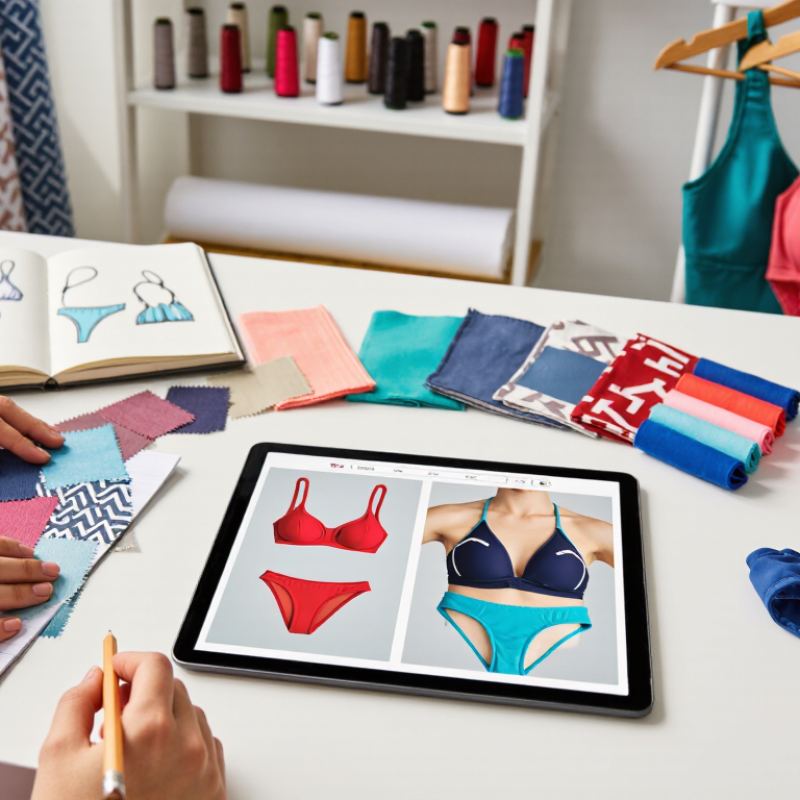
Top Custom Swimwear Manufacturers for Global Buyers

What Custom Swimwear Manufacturers Do

Custom swimwear manufacturers turn a design brief into a product that can be cut, sewn, tested, and reordered. They review sketches or tech packs, confirm measurements, develop patterns, and grade sizes. Then they source fabrics, linings, elastics, and trims. Small details matter: strap width, seam placement, and how a lining feels when wet. The process is rarely tidy. A first sample may pull at the hip or sag after movement, so fit comments often lead to another round of adjustments.


Material choices also require careful discussion. Textile Exchange’s Materials Market Report 2024 estimates that global fiber production reached 124 million tonnes in 2023. That figure covers many textile sectors, not swimwear alone, but it shows the scale of material sourcing behind apparel. A capable factory can explain fabric composition, stretch recovery, opacity, and care needs, rather than simply offering a color card. Buyers should ask how samples are tested for chlorine exposure, saltwater, and colorfastness, and request clear production tolerances. Tests do not guarantee every wearer’s experience. They do make decisions more transparent. Manufacturers also coordinate bulk production, inspect stitching and measurements, and flag issues before shipment. Custom does not always mean unlimited options; minimum quantities, lead times, and fabric availability can narrow the choices.

How to Evaluate Swimwear Manufacturers for Global Sourcing

Choosing a swimwear manufacturer for global sourcing requires more than comparing quoted prices. Start with the product itself: a lined one-piece, a reversible bikini, and a high-support style place different demands on patternmaking and sewing. Ask which constructions the factory regularly handles, and request examples of similar work. Specific answers matter. “We can make anything” is not enough.

Review a sample closely. Check seam stretch, lining coverage, strap security, and how the fabric recovers after being pulled. Ask how the team tests color change and fit after repeated washing. Useful evidence may include test records, material specifications, and documented size measurements. A swatch under bright light can reveal shade variation. So can a rushed sample. Neither tells the whole story.

Discuss production capacity, minimum quantities, lead times, and quality checks before placing an order. Confirm who approves fabric substitutions and how defects are recorded. Request a clear cost breakdown, including labels, packaging, and sample charges. Communication deserves a test, too: send a detailed specification sheet and see whether questions come back promptly. One weakness in this process is easy to miss: a polished sample may not reflect every production batch. Build in inspection steps, and keep written records of agreed measurements and materials.

How to Evaluate Swimwear Manufacturers for Global Sourcing

Example buyer scorecard across six sourcing criteria. Scores are illustrative ratings on a 1–5 scale, not measured results for specific manufacturers or market-wide data.

Assess fabric and construction quality, verify relevant compliance documentation, and compare minimum order quantities, lead times, customization capabilities, and communication using the same criteria for every candidate.

Leading Custom Swimwear Manufacturers for Global Buyers

Leading custom swimwear manufacturers help global buyers turn design ideas into garments that fit, perform, and arrive consistently. A capable supplier should explain fabric options, sampling steps, minimum order quantities, and production timelines in clear terms. Ask how samples are checked for stretch recovery, lining coverage, seam strength, and color consistency. These details matter in swimwear, where a suit may look excellent on a hanger but shift during movement.

Request a sample in the intended fabric and review it after washing and drying. Check whether elastic stays flat, seams feel smooth against the skin, and sizing matches the measurement chart. For international orders, confirm packaging details, carton quantities, and shipping milestones before production begins. Keep approvals and revisions in writing. It prevents avoidable confusion, though it cannot remove every production risk. No manufacturer is perfect; even a well-managed sample may differ slightly from bulk output. Discuss acceptable tolerances and inspection procedures in advance. Buyers should also ask how the supplier handles defects and delayed materials. A direct answer is more useful than a polished promise.

Top Custom Swimwear Manufacturers for Global Buyers – Leading Custom Swimwear Manufacturers for Global Buyers

This comparison describes common manufacturer types and sourcing considerations, not named companies. Minimums and lead times are indicative planning ranges only; confirm current terms, capabilities, and compliance directly with each supplier.

Manufacturer Type Typical Product Focus Common Customization Options Indicative Minimum Order Indicative Bulk Lead Time Key Buyer Checks
Full-package swimwear factory Women’s, men’s, and children’s swimwear; development through finished-goods production. Custom patterns, fabric and color selection, labels, packaging, and selected trim options. Often around 100–500 pieces per style or color; actual minimums vary by fabric and construction. Commonly about 30–60 days after sample approval and material readiness. Ask whether pattern development, fabric sourcing, testing, and packaging are included in the quoted price.
Private-label swimwear producer Production based on established silhouettes with options for a buyer’s own labels and colorways. Labeling, color choices, prints, hardware, and selected fit adjustments. May be lower for stock fabrics and existing patterns; custom materials can raise the minimum. Depends on stock availability, order size, and the production calendar. Confirm which elements are genuinely customizable and whether the base patterns can be revised.
Performance swimwear specialist Training, competition, and frequent-use swimwear requiring attention to fit, stretch, and durability. Panel construction, lining, compression or support features, and performance fabric selection. Usually determined by fabric availability, construction complexity, and testing requirements. Allow time for fit testing, revisions, and any material-performance checks. Request fabric specifications and evidence for any claims about chlorine resistance, stretch recovery, or sun protection.
Small-batch or sampling-focused workshop Product development, prototypes, capsule collections, and lower-volume production runs. Pattern refinement, fit adjustments, limited colorways, and small-scale design changes. Potentially suitable for small runs, though per-unit costs may be higher and fabric choices more limited. Sampling and revisions can add time before bulk production begins. Clarify sample charges, revision limits, production capacity, and whether the same team handles bulk orders.
Printed-swimwear production specialist Swimwear featuring custom all-over prints or coordinated printed collections. Artwork placement, print scale, color matching, and selected fabric bases. May depend on print setup, fabric-yardage requirements, and whether designs can be grouped. Include artwork approval, strike-offs or print samples, and fabric production in the schedule. Check print color approval, repeat alignment, fabric suitability, and the supplier’s process for handling artwork files.
Export-oriented garment manufacturer Production for international shipments, with experience coordinating export documentation and logistics. Product development and customization depend on the factory’s swimwear specialization. Varies by factory, order size, destination requirements, and material sourcing. Production time is separate from shipping and customs clearance. Verify the named exporter, shipping terms, destination-market requirements, and responsibility for export documents.

Materials, Production Methods, and Customization Options

For global buyers, swimwear performance begins with the fabric. Nylon blends often feel smooth and offer good stretch, while polyester can provide useful color retention and durability. Recycled fibers are another option, but their hand feel and recovery vary by construction. Ask for a fabric swatch, not just a specification sheet. Feel matters.

Lining, elastic, and stitching also affect comfort. A soft outer fabric can still feel restrictive if the lining is too firm or the leg elastic is over-tensioned. Production methods may include cut-and-sew construction, flatlock seams, and heat-applied details. Each choice suits different designs, and none guarantees a better garment on its own. Request a sample made with the intended materials.

Customization can cover prints, colors, straps, coverage, padding, and hardware. Share a clear tech pack with measurements and reference photos; vague notes can lead to avoidable revisions. Test fit across the size range, since a sample in one size cannot reveal every grading issue. One limitation is that extra options can slow sampling and complicate quality checks. Sometimes a simpler design is easier to produce consistently.

Quality Control, Compliance, and International Shipping Considerations

Swimwear quality is decided before the first sample looks finished. Ask manufacturers to record fabric composition, shade, weight, and batch numbers at intake. For each production run, test chlorine resistance, colorfastness, stretch recovery, and seam strength. Then inspect fit across sizes, not only on one model. A swimsuit can pass a visual check and still lose shape after repeated pool use. Testing should follow the buyer’s destination-market requirements, with laboratory reports tied to the actual fabric batch. Still, audits are snapshots.

Compliance also depends on clear records. Request current test results for restricted substances, fiber content, and care-label claims, then confirm that the documents match the shipped goods. Textile Exchange’s Materials Market Report 2024 estimates global fiber production reached 124 million tonnes in 2023, with polyester representing 57 percent. That scale makes material traceability more than paperwork. It helps buyers identify what is in a fabric and where it came from. International shipping needs equal care: UNCTAD’s Review of Maritime Transport 2024 notes that over 80 percent of world trade by volume moves by sea. Build in time for port delays, and verify carton counts, packing lists, and shipping marks before dispatch. One weak point remains: test samples may not reflect every production lot. Random checks help, but they do not remove that risk.

FAQS

What should buyers check before choosing a swimwear manufacturer?

Ask about experience with your construction, such as lined one-pieces or reversible bikinis. Request examples of similar work. “We can make anything” is too vague.

How can I assess a swimwear sample?

Stretch the seams and check lining coverage, strap security, and fabric recovery. Wash and dry it, then inspect the fit again. Samples can mislead.

Which fabric and color checks are useful?

Request material specifications and color-test records. View a fabric swatch under bright light, but remember that one swatch cannot show every batch variation.

What production details should I confirm?

Confirm minimum quantities, production capacity, and lead times before ordering. Ask who approves fabric substitutions and how defects are recorded.

How should I review quality controls?

Ask about seam strength, stretch recovery, and fit checks. Agree on inspection steps and acceptable measurement tolerances in writing.

What should a cost breakdown include?

Request separate costs for samples, labels, and packaging. A low quoted price may leave important charges unclear.

How can I test supplier communication?

Send a detailed specification sheet with measurements and materials. Notice whether questions arrive promptly and address specific details. Clear answers help.

Can an approved sample guarantee consistent bulk production?

No. A well-managed sample may still differ slightly from production batches. Keep written approvals and inspect goods during production where possible.

Conclusion

Custom Swimwear Manufacturing helps global buyers turn design concepts into finished swimwear through services such as pattern development, sampling, fabric selection, and large-scale production. Choosing a suitable manufacturer involves comparing experience, production capacity, communication, minimum order quantities, lead times, and the ability to support different styles and markets. Buyers can also assess whether a factory offers practical guidance throughout development, from initial specifications to final packaging.

Materials and production methods affect a swimsuit’s comfort, fit, durability, and appearance. Manufacturers may offer options such as different fabric blends, linings, prints, trims, and sizing details to match a buyer’s requirements. Before placing an order, buyers should clarify quality standards, request samples, and confirm how inspections are handled. They should also discuss relevant product and labeling requirements, shipping schedules, packaging, and export documentation in advance to reduce delays and help ensure a smooth international sourcing process.

Clara

Clara

Clara is a dedicated marketing professional who combines strategic insight, creative communication, and a deep understanding of the company’s products. With extensive experience in market research, content strategy, and customer-focused communication, she plays an important role in presenting the......