0%

Choosing a top custom bra manufacturer in 2026 means looking beyond a polished sample. The right partner must turn fit requirements, fabric choices, and production targets into repeatable results. That is harder than it sounds. A bra’s wire channel, strap elastic, hook placement, and cup seam can each affect comfort and support.

The commercial stakes are significant. Grand View Research’s Lingerie Market report estimated the global lingerie market at USD 94.5 billion in 2023 and projected a 6.1% compound annual growth rate from 2024 to 2030. This is a broad category estimate, not a forecast for custom bras alone. McKinsey’s State of Fashion reporting also highlights persistent pressure on brands to balance value, quality, and resilient supply chains. For buyers, those pressures make transparent costing and dependable lead times practical evaluation criteria.

Custom Bra Manufacturing relies on details that a sales presentation may not reveal. Ask how the factory grades patterns across sizes, tests stretch recovery, checks stitching, and handles changes after a fit session. Request measurable evidence, such as sample approval records, defect tracking, and clear production timelines. A beautiful first sample is not proof of consistent bulk quality. Nor does a low quote guarantee a reliable partnership. Small details matter. I would also leave room to revise assumptions: preferred materials, minimum order quantities, and fit standards can change once real wear testing begins. This guide explains how to assess a manufacturer’s expertise, communication, quality controls, and capacity before committing to production.
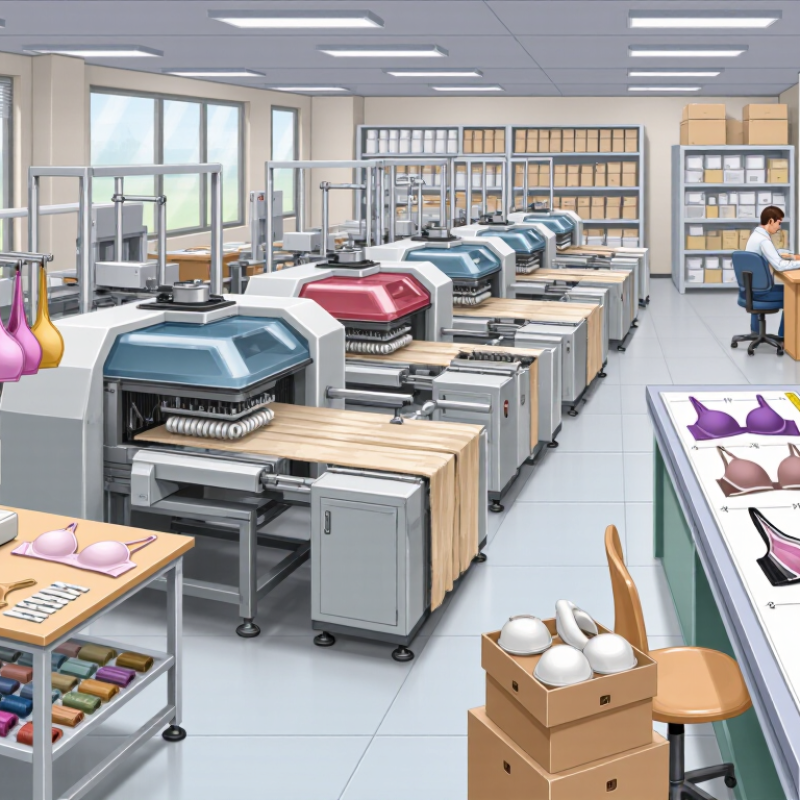
How to Choose a Top Custom Bra Manufacturer in 2026?

Define Your Custom Bra Requirements and Target Market

How to Choose a Top Custom Bra Manufacturer in 2026?
Define Your Custom Bra Requirements and Target Market

Before contacting manufacturers, write a product brief with measurable details: size range, coverage, support level, fabric feel, closure type, and intended price. Specify whether the bra is for daily wear, sports, nursing, or another use. A soft sample fabric and a firm underband can feel very different on the body, so request prototypes and test them on people who match your intended customers. A tidy size chart may still miss real fit differences. Revisit it.

Your target market should shape those specifications. Consider customers’ climate, preferred silhouettes, shopping channels, and willingness to pay—not just broad age groups. Grand View Research estimated the global lingerie market at USD 92.43 billion in 2023 and projected a 6.1% compound annual growth rate from 2024 to 2030. This category-level forecast signals opportunity, but it does not prove demand for your specific design. Validate demand with interviews, fit trials, or small preorder tests before committing to large production quantities.

Tips: Share a one-page brief, reference measurements, and clear photos of construction details. Ask manufacturers about sample fees, minimum order quantities, grading, and fabric availability. Keep one unresolved question in your brief; early feedback may show that your original assumption was wrong.

Evaluate a Manufacturer’s Expertise, Capacity, and Product Range

Choosing a custom bra manufacturer in 2026 starts with evidence, not polished photos. Ask who develops patterns, grades sizes, and checks fit across the size range. Request a sample using your intended fabric, closures, and strap width. Inspect seam finish, elastic recovery, cup symmetry, and wire-channel comfort after several wears. Small details matter.

Review the team’s experience with the construction you need, such as molded cups, wireless support, or nursing access. Ask how fit comments are recorded and carried into revised samples. A capable partner should explain trade-offs clearly, not promise that every design works for every body. Check monthly output, staffing, and lead times against your forecast. Maximum capacity on paper can differ from available capacity. A pilot order may reveal more than a sales call, though it costs time.

Compare the product range with your plans for fabric, size grading, and construction options. Can the manufacturer handle a simple everyday style and a more technical sports bra? Ask which materials and components it can source consistently, and request specifications for testing and approval. It is easy to overvalue a broad catalog; I would look closer at the items the factory produces repeatedly. One awkward sample is not always a deal-breaker, but unclear answers about how it will be corrected deserve attention.

Verify Materials, Quality Controls, and Compliance Standards

A reliable custom bra manufacturer should show more than a polished sample. Ask for fiber content documents, supplier traceability, and current test reports tied to the materials used in your order. Textile Exchange’s Materials Market Report 2024 estimates that global fiber production reached 124 million tonnes in 2023, with polyester making up 57%. That scale makes material verification important. A fabric label alone cannot confirm what is inside the finished garment.

Check how the factory controls production. Request records for incoming fabric inspection, seam strength, colorfastness, elastic recovery, and fit checks across sizes. Ask whether testing is performed by an independent laboratory, and verify that any certificate covers the specific fabric or product—not just the supplier. ISO 9001 concerns quality-management systems; it does not certify a bra’s performance. Small details matter. A certificate helps, but it cannot prove every shipment matches the approved sample.

Tips: Request a sample report for the exact fabric lot, then compare it with the bulk order. Ask how defects are recorded and corrected, and how often tests are repeated. Confirm that chemical-safety claims identify a recognized standard and valid scope. Keep the answers in writing. Some factories may not share every supplier name; that is worth discussing, not automatically dismissing.

How to Choose a Top Custom Bra Manufacturer in 2026? - Verify Materials, Quality Controls, and Compliance Standards
Evaluation Area What to Verify Practical Evidence to Request Why It Matters
Fabric and component traceability Confirm fiber composition and identify the fabric, lining, elastic, thread, hooks, sliders, and other components used in the approved sample and production order. Material specification sheets, supplier declarations, purchase records, and traceable lot or batch references. Check that records match the actual production materials. Bras combine multiple materials, and substitutions can affect fit, stretch, hand feel, durability, and labeling accuracy.
Chemical and skin-contact checks Define applicable chemical restrictions for each sales market. For EU/EEA sales, review relevant REACH requirements, including restrictions and applicable SVHC communication duties. Recent test reports or declarations tied to the relevant material or product, with the tested article, test method, date, and laboratory identified. Verify any certificate directly with its issuer and check its product scope. Legal obligations depend on the substance, product, and market. A general statement such as “compliant” does not show which materials or requirements were assessed.
Certification scope If a supplier offers OEKO-TEX® STANDARD 100 certification, check that the certificate is current and covers the relevant product or components. Class II is the product class generally used for textiles with direct skin contact. Certificate number, validity information, certified article or product scope, and verification through the certification scheme’s official verification service. A certificate applies only to its stated scope and validity; it should not be treated as proof that every product or legal requirement is covered.
Quality management Assess whether documented procedures control incoming materials, production, inspection, nonconforming goods, corrective actions, and record retention. ISO 9001 certification may be one useful indicator of a quality management system. Process documents, inspection records, corrective-action examples, and—if certification is claimed—a current certificate whose scope and issuing certification body can be checked. ISO 9001 is a management-system standard, not a product-quality certificate. Consistent records help show how issues are prevented and corrected.
Fit, construction, and performance testing Agree on a size range, measurement tolerances, grading rules, fit approval process, and product-specific tests. Relevant methods may include ISO 5077 for dimensional changes after washing and ISO 105-C06 for colour fastness to domestic and commercial laundering. Approved size specifications, fit comments and revisions, test reports for the agreed material or finished product, and written acceptance criteria agreed before production. Test methods measure defined properties; they do not set one universal pass limit for every bra. Requirements should reflect the design, intended use, and care instructions.
In-line and final inspection Check that the inspection plan covers measurements, stitching, seams, elastic attachment, strap adjustment, hardware function, appearance, and packaging. If sampling is used, agree on the sampling plan and acceptance criteria in advance. In-line and final inspection checklists, defect classifications, dated inspection reports, and any agreed sampling reference, such as ISO 2859-1. ISO 2859-1 describes sampling procedures for inspection by attributes; it does not itself guarantee that a batch is defect-free or prescribe every buyer’s acceptance limits.
Fiber and care labeling Confirm labeling rules for every destination market. EU textile fiber-composition labeling is governed by Regulation (EU) No 1007/2011. In the United States, textile product labeling and care-label requirements include FTC rules under 16 CFR Parts 303 and 423, as applicable. Final artwork and label proofs, verified fiber-content declarations, origin details where required, and a documented basis for care instructions. Label requirements vary by market and product. The label must match the materials actually used and the applicable local rules.
Production approval and change control Require written approval of the final sample, specifications, materials, labels, and packaging before bulk production. Establish how material or process changes are submitted and approved. Signed or otherwise documented sample approval, controlled specification version, purchase-order references, and records of approved changes. Clear approval and change records reduce the risk of production differing from the fit, construction, or materials that were reviewed.
Market-specific obligations List the countries of sale and check the product’s applicable safety, chemical, labeling, and importer obligations with qualified compliance support where needed. A market-by-market compliance checklist identifying the applicable rules, responsible parties, supporting documents, and any unresolved requirements. There is no single universal “global compliance certificate” that replaces checking the rules for each intended market.

Evaluation note: Treat standards and certifications as evidence to verify, not as substitutes for written product specifications, market-specific legal review, and production controls.

Compare Pricing, Minimum Orders, Lead Times, and Support

Compare written quotes on the same product specification, not just the unit price. A bra quote should clarify fabric, lining, trims, size range, labels, packaging, and sample fees. Ask whether the price changes at different order quantities, and whether development costs are refundable after production begins. For example, a low quote may exclude graded sizes or a second fitting round. Small orders can help test demand, but their per-unit cost is often higher. That matters.

Lead times need the same careful comparison. Request separate estimates for sampling, revisions, material sourcing, and bulk production, then ask what could delay each stage. A calendar date without these details is hard to rely on. Check how the manufacturer handles fit feedback, measurement changes, and production updates. A named contact and a predictable response window make problems easier to catch. Try one detailed question before committing; the reply can reveal how clearly the team communicates. One awkward point: even a polished schedule can shift when a fabric is unavailable, so ask how delays are reported. The cheapest offer may still be the wrong fit if support is slow or minimums exceed your realistic sales forecast.

Assess Samples and Confirm the Manufacturer Before Ordering

A sample reveals more than a product photo. Check the cup shape, band tension, strap adjustment, and seam finish on a real garment. Try it on different body shapes if possible. A fit that feels secure on one person may shift on another. Note pressure marks, gaps, and movement when reaching overhead. Small details matter.

Wash the sample according to the care instructions, then inspect its color, stretch, and stitching. Feel the fabric after drying. Is it still soft? Ask for revised samples when the fit or construction misses the mark. One round may not be enough, and that can affect your timeline. Keep dated notes and clear photos so feedback stays specific.

Before ordering, confirm who will make the garments and where production will take place. Request a video call or facility visit, and ask how the team handles quality checks, material sourcing, and order changes. Compare the approved sample with written specifications for measurements, fabrics, trims, and tolerances. Check that the contact person answers technical questions clearly. Promises sound reassuring, but details are better. I would not treat a polished sample as proof that every production unit will match; agree on inspection criteria and how defects will be addressed before paying a deposit.

FAQS

What should I include in a custom bra product brief?

Specify the size range, coverage, support, fabric feel, closure, target price, and intended use. Add reference measurements and clear construction photos.

How can I check whether customers want my design?

Interview potential customers, run fit trials, or test a small preorder. Broad market growth does not prove demand for one particular design.

What details should I ask about materials?

Request fiber content documents, supplier traceability, and test reports for the materials in your order. A fabric label alone is not enough.

Which production quality checks matter for bras?

Ask about fabric inspection, seam strength, colorfastness, elastic recovery, and fit checks across sizes. Small details matter.

How should I evaluate a bra sample?

Try it on different body shapes. Check cup shape, band tension, strap adjustment, seam finish, pressure marks, and gaps.

Should I wash a sample before approving it?

Yes. Follow its care instructions, then inspect the color, stretch, stitching, and fabric feel after drying. It may change.

How can I confirm production will match the approved sample?

Put measurements, fabrics, trims, tolerances, and inspection criteria in writing. A polished sample cannot guarantee every garment will match.

What should I clarify before placing an order?

Confirm who makes the garments, where production happens, sample fees, minimum quantities, and how defects or order changes are handled. Leave room to revise assumptions.

Conclusion

Choosing a top custom bra manufacturer in 2026 begins with a clear understanding of your product requirements and target market. Define the styles, sizes, fabrics, design features, and expected order volumes you need, then assess whether each manufacturer has the relevant expertise, production capacity, and product range. Strong Custom Bra Manufacturing partners should be able to explain their material options, quality-control processes, and applicable compliance standards clearly.

Compare pricing alongside minimum order quantities, production lead times, communication, and ongoing support. Before committing to a large order, review samples for fit, construction, comfort, and consistency, and discuss any revisions with the manufacturer. By weighing these factors together and confirming expectations in writing, you can make a more informed choice and build a reliable production partnership suited to your business goals.

Elowen

Elowen

Elowen is a professional marketing specialist dedicated to helping businesses communicate their value with clarity, accuracy, and purpose. With a strong understanding of the company’s products, target audiences, and industry trends, Elowen regularly contributes insightful articles to the company......