Choosing among the 2026 best neck gaiter manufacturers takes more than comparing quoted prices. Global buyers need to assess fabric performance, production consistency, customization, lead times, and communication. A sample that feels soft in a showroom may behave differently after repeated washing. Small details matter.
Neck Gaiter Manufacturing combines textile selection with practical design decisions. Buyers should ask about fabric composition, stretch recovery, seam construction, colorfastness, and available testing records. Request samples in the intended fabric and weight. Check how the gaiter sits over the nose and mouth, and whether its edges curl after wear. These checks are useful, not perfect. A short sample review cannot predict every production issue.
Apparel sourcing consultant Jordan Lee offers this practical rule: “A reliable supplier should explain what a sample proves—and what it does not.” Use that question when reviewing factories and trading companies. Compare their answers, not just their brochures. This guide will examine manufacturers through product range, customization options, quality controls, minimum order quantities, and export support. It will also flag details buyers should verify directly, since factory claims can vary in depth. No single supplier fits every market. Your material brief, target price, and delivery window still shape the right choice. Ask clearly. Keep records. Check again.
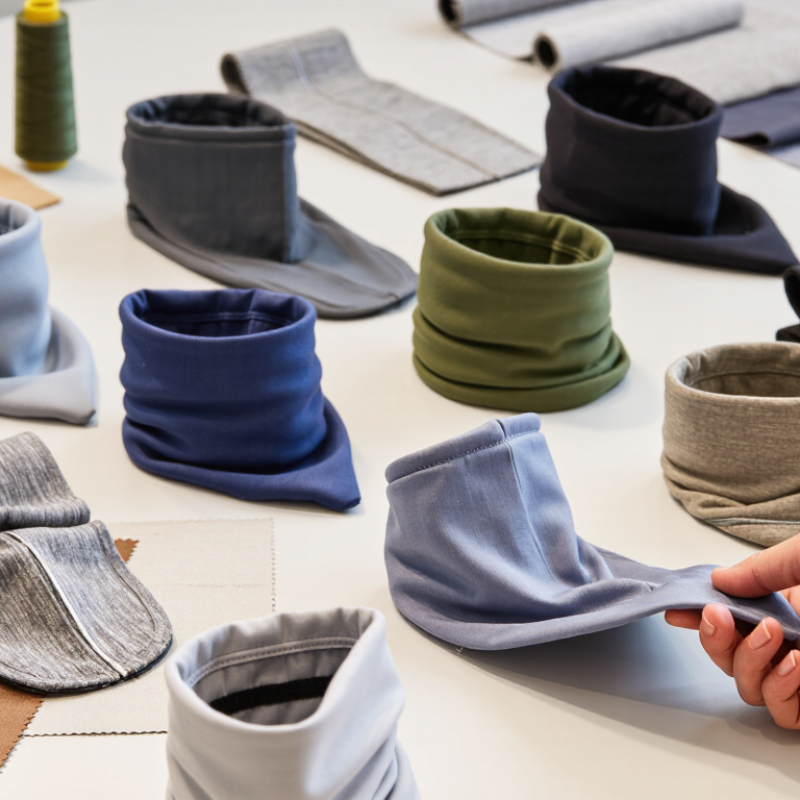
A neck gaiter is a tube of fabric worn around the neck, usually pulled over the nose, ears, or head when conditions change. Unlike a scarf, it has no loose ends to flap or snag. On a cold trail, it can cover the neck beneath a jacket collar; in wind, it can shield the lower face. It may also help keep sweat or dust off the skin, though it is not a substitute for certified protective equipment. Simple, but useful.
The Outdoor Foundation’s 2024 Outdoor Participation Trends Report counted 175.8 million U.S. participants in outdoor recreation during 2023, a reminder that this accessory serves varied activities, from hiking to cycling. Fabric choice matters. Polyester dries quickly, while merino wool can feel warmer in cool conditions; neither performs equally well for every wearer. Textile Exchange’s Materials Market Report 2024 says polyester made up about 57% of global fiber production in 2023, showing its importance in textile supply. Yet a high share does not mean every gaiter is comfortable. Check breathability, stretch, seam placement, and wash instructions. Fit is personal, and a gaiter that slips over the nose may be irritating by lunchtime. No fabric is magic.
Neck gaiters are tubular fabric accessories worn around the neck and can be pulled up to cover the face or head. Fiber choice affects how a fabric interacts with moisture. The chart shows approximate conventional moisture-regain values for common textile fibers, not the performance of any particular gaiter; blends and fabric construction can change the result.
Choosing a neck gaiter manufacturer in 2026 takes more than comparing unit prices. Ask how the fabric is knitted, finished, and checked before packing. A supplier should explain fiber content, stretch recovery, seam construction, and color consistency in plain terms. Details matter. Request a current specification sheet, then compare it with a physical sample under daylight and indoor lighting.
Test samples after repeated washing, not just straight from the parcel. Measure length and width before and after; note whether the opening loosens or the fabric pills. For sports use, check breathability during a brisk walk and whether moisture dries at a practical pace. Ask for batch inspection records and clarify how defects are counted. A neat sample proves little.
Discuss minimum order quantities, lead times, packaging, and what happens when a shipment misses agreed measurements. Request realistic production timelines, not optimistic promises. If possible, review a recent production lot and inspect several pieces, including seams and printed edges. Communication can be uneven, even with capable factories; record specifications in writing and confirm changes before bulk production. One successful sample does not prove consistent output.
For global buyers, leading neck gaiter manufacturers are not simply those offering the lowest unit price. They should demonstrate reliable fabric sourcing, consistent sizing, neat seams, and capacity for custom orders. The Outdoor Industry Association’s 2024 Outdoor Participation Trends Report counted 175.8 million U.S. outdoor recreation participants in 2023. That figure is not a neck gaiter sales forecast, but it signals a broad, active user base. Ask factories how they check stretch recovery after washing and whether openings fit comfortably over helmets or jacket collars. Small details matter.
Request a sample from the production line, not just a showroom piece. Check seam bulk against the cheek, stretch the hem, and compare colors across several units. Textile Exchange’s Materials Market Report 2024 reports that global fiber production reached 124 million tonnes in 2023, underscoring the value of material traceability. Ask for fiber composition records and relevant test results for colorfastness, pilling, and moisture management. Ask for proof. A polished sample is not proof; that distinction is easy to overlook. Confirm lead times, minimum order quantities, packaging, and defect handling in writing. No checklist catches every production issue, so pilot orders remain useful.
| Comparison Dimension | Common Manufacturing Options | What Global Buyers Should Verify | Useful Test or Documentation |
|---|---|---|---|
| Fabric composition | Polyester, nylon, elastane blends, merino wool, and recycled polyester are used for different performance and comfort requirements. | Request the exact fiber percentages, fabric weight, country of origin, and confirmation that bulk fabric matches the approved sample. | Fiber-composition test report; material specification sheet. |
| Fabric construction | Seamless circular-knit tubes and cut-and-sewn designs are both used. Construction affects stretch, fit, seam placement, and production method. | Check the finished dimensions, stretch and recovery, seam type, edge finishing, and consistency across sizes and production lots. | Approved sample; measurement and inspection report. |
| Moisture management | Quick-drying performance depends on the fiber, yarn, fabric structure, and any applied finish; it should not be assumed from fiber content alone. | Ask for test conditions and results for drying or moisture-management claims, and confirm whether performance depends on a chemical finish. | Relevant laboratory test report and finish declaration. |
| Sun protection | Ultraviolet protection varies with fabric construction, color, stretch, and condition. A product should not be assigned a UPF claim without testing. | Request the tested UPF value, report for the actual fabric or finished product, and the market-specific labeling basis. | UPF test report; AS/NZS 4399 is a sun-protective clothing standard used in Australia and New Zealand. |
| Colorfastness | Color performance can differ by dye, fabric, and finishing process. Washing and rubbing may affect appearance. | Set acceptance requirements for the intended care method and inspect color consistency between samples and bulk goods. | ISO 105-C06 covers colorfastness to domestic and commercial laundering; ISO 105-X12 covers colorfastness to rubbing. |
| Mechanical durability | Fabric strength and resistance to wear depend on yarn, knit structure, finishing, and product construction. | Specify the areas and conditions to be tested, and compare results against agreed buyer requirements rather than relying on broad durability claims. | ISO 13934-1 describes a strip method for determining textile tensile properties. |
| Chemical and material safety | Safety requirements depend on the destination market, product claims, materials, dyes, and any functional finishes. | Confirm applicable legal requirements, request current documentation for the supplied materials, and verify certificate scope and validity where certification is claimed. | OEKO-TEX STANDARD 100 is a textile-product testing and certification system; verify the certificate and product scope with the issuer. |
| Care and shrinkage | Dimensional change can vary with fiber blend, knit construction, heat setting, and laundering conditions. | Agree on care instructions and dimensional-change tolerances, then test using the laundering method relevant to the product. | ISO 6330 specifies domestic washing and drying procedures for textile testing. |
| Customization and labeling | Common options include custom colors, prints, labels, packaging, and product dimensions; availability depends on factory equipment and order requirements. | Approve artwork, placement, color references, labeling languages, packaging details, and a pre-production sample before bulk production. | Approved artwork and sample; packaging and labeling checklist. |
| Quality control and export readiness | Inspection stages may include incoming-material checks, in-process inspection, and final inspection. Export documents vary by destination and shipment terms. | Agree on inspection criteria, defect definitions, sampling plan, production timeline, shipment terms, and required destination-market documents. | Written quality plan; inspection report; commercial invoice, packing list, and other documents required for the shipment. |
This table is a supplier-evaluation guide, not a ranked list or a claim about any specific manufacturer. Confirm specifications, test results, certificates, and regulatory requirements for the actual product and destination market.
A strong neck gaiter manufacturer should explain exactly what each fabric offers. Polyester dries quickly, while merino blends feel warmer but need careful care. Lightweight stretch fabrics suit active use; brushed interiors can add comfort. Ask for fiber percentages, fabric weight, and test results, not just a sample. Details matter. Request a wash sample and check whether the gaiter twists, pills, or loses shape after repeated use.
Customization goes beyond color. Buyers may specify dimensions, seams, labels, packaging, and print placement. Ask how artwork is checked against the final fabric, since colors can shift between screens and production. Compliance also needs practical attention. Request current test reports for relevant material and product requirements in each sales market. Confirm that reports match the actual fabric, color, and production site. A certificate with unclear scope is not enough.
Production capability should be assessed through sampling, capacity, and quality controls. Ask about minimum order quantities, monthly output, inspection points, and realistic lead times. A clear defect process matters too. A perfect sample can still hide problems in bulk production, so request photos or inspection records from finished orders. Not every supplier will disclose every detail immediately; that is worth discussing before a deposit is paid.
When comparing neck gaiter manufacturers, test samples under real conditions, not just on a desk. Check fabric weight, stretch recovery, breathability, and whether the edge seams rub against the skin. Measure the gaiter before and after washing; even a small change can affect fit. Ask for the fabric composition and care instructions in writing. A soft sample can still feel hot during a long outdoor shift. It is easy to overvalue appearance.
Compare quotes line by line. Confirm the price basis, minimum order quantity, size and color options, packaging costs, and any sampling or setup fees. Ask whether the quoted fabric and construction match the sample you approved. Request a written production timeline, including sample approval, bulk production, inspection, and dispatch. A low unit price may hide a longer lead time or extra charges. Keep the approved sample for reference, though it may not represent every piece in a large order.
Tips: Ask suppliers to quote the same specifications and delivery destination. Confirm the shipping method, named delivery terms, who pays freight and duties, and what happens if production is delayed. Get dates, tolerances, and defect remedies in writing. Leave time for revisions. I learned that part late.
It is a tube of fabric worn around the neck. Pull it over your nose, ears, or head when conditions change. No loose ends.
It can cover your neck beneath a jacket collar or shield your lower face from wind. It may also keep sweat or dust off your skin.
No. It is not a substitute for certified protective equipment. That distinction matters.
Polyester dries quickly, while merino wool can feel warmer in cool conditions. Neither suits every wearer. Check breathability and stretch, too.
Try it on and see whether it stays in place without irritating your nose. Fit is personal. A slipping gaiter can become annoying by lunchtime.
Check the seams, printed edges, stretch recovery, and color consistency. Compare the sample with its specification sheet under daylight and indoor lighting.
Wash it repeatedly, then measure its length and width again. Look for loosening openings or pilling. A neat first impression proves little.
Ask about minimum order quantities, lead times, packaging, and batch inspection records. Put specifications in writing, and confirm changes before bulk production. I might be overchecking, but one successful sample cannot prove consistent output.
Neck gaiters are versatile fabric accessories worn around the neck and can also provide lightweight coverage for the face, head, or ears during outdoor activities, travel, and everyday use. This guide explains how global buyers can assess neck gaiter manufacturers in 2026 by looking at product experience, production capacity, communication, quality controls, and the ability to meet order requirements. It also outlines key considerations in Neck Gaiter Manufacturing, including fabric choices, comfort, durability, sizing, color options, printing, packaging, and customization.
Rather than relying on a single supplier feature, buyers can compare manufacturers according to how well their capabilities match the intended market and order scale. The guide also covers how to review samples for fit and workmanship, compare quotes for clarity and completeness, and confirm minimum order quantities, production timelines, shipping arrangements, and delivery terms. These practical checks help buyers make informed sourcing decisions and establish clear expectations before placing an order.